
Roof replacement
Plan the roof. See the breakdown.
Compare covering, labor and the extras that change your estimate.
Roof cost calculatorEstimate what it costs to replace a roof, windows, HVAC or another home system. Start with an itemized project range, then explore how depreciation and your deductible could affect a covered insurance claim.
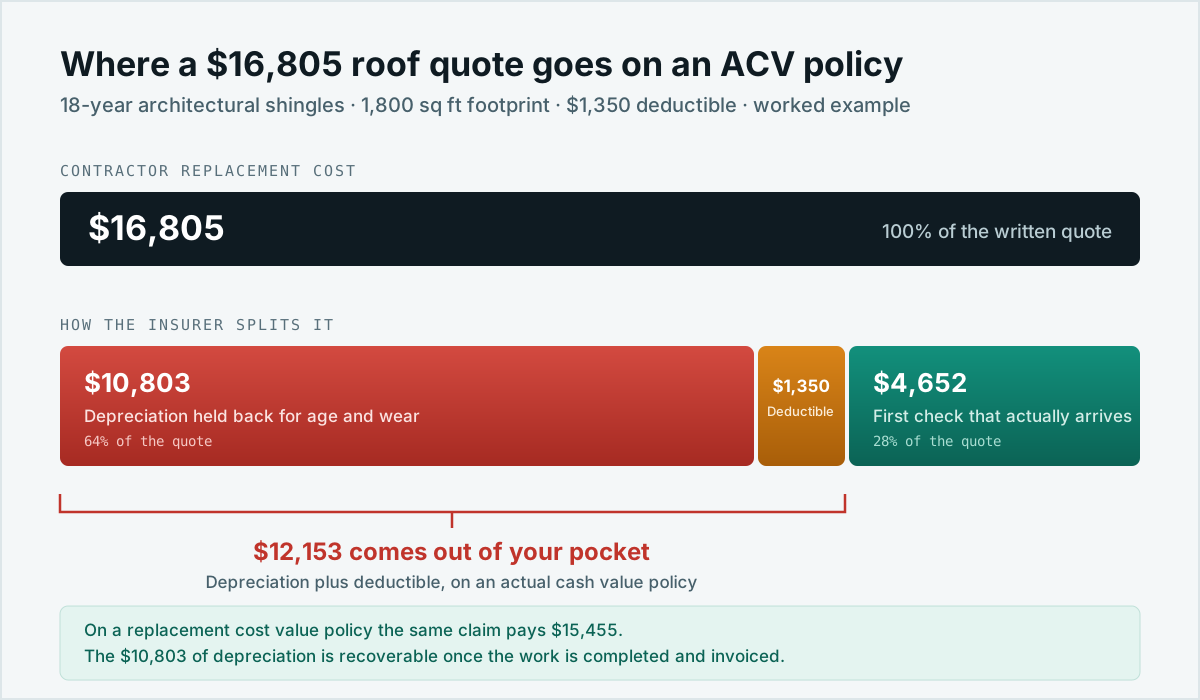
An 18-year-old architectural shingle roof, 1,800 sq ft footprint, on an actual cash value policy with a $1,350 deductible. That is a $12,153 gap. Worked example — run your own below.
Compare covering, labor and the extras that change your estimate.
Roof cost calculatorAdjust your project assumptions before comparing solar quotes.
Solar cost calculatorExplore equipment and installation costs for your next HVAC system.
HVAC cost calculatorSet the opening count, frame material and replacement scope.
Window cost calculatorCompare a replacement system and the work around it.
Water heater calculatorConsider wall area, material and the finishing details.
Siding cost calculatorEstimate gutter runs, downspouts and your project scope.
Gutter cost calculatorCompare floor area, material and preparation assumptions.
Flooring cost calculatorExplore how depreciation and a deductible affect a worked estimate.
Claim gap calculator
Set the opening count, frame material and replacement scope.
Window cost calculatorCompare a replacement system and the work around it.
Water heater calculatorConsider wall area, material and the finishing details.
Siding cost calculatorEstimate gutter runs, downspouts and your project scope.
Gutter cost calculatorCompare floor area, material and preparation assumptions.
Flooring cost calculatorExplore how depreciation and a deductible affect a worked estimate.
Claim gap calculatorCompare covering, labor and the extras that change your estimate.
Roof cost calculatorAdjust your project assumptions before comparing solar quotes.
Solar cost calculatorExplore equipment and installation costs for your next HVAC system.
HVAC cost calculatorAll 9 tools rotate automatically · Pause anytime · Illustrative AI-generated photos

This page was last checked against current NAIC coverage definitions and BLS producer-price movement on 23 August 2026. Ranges are reviewed quarterly and after any material federal rule change — the editorial policy sets out what triggers a rewrite rather than a date bump.
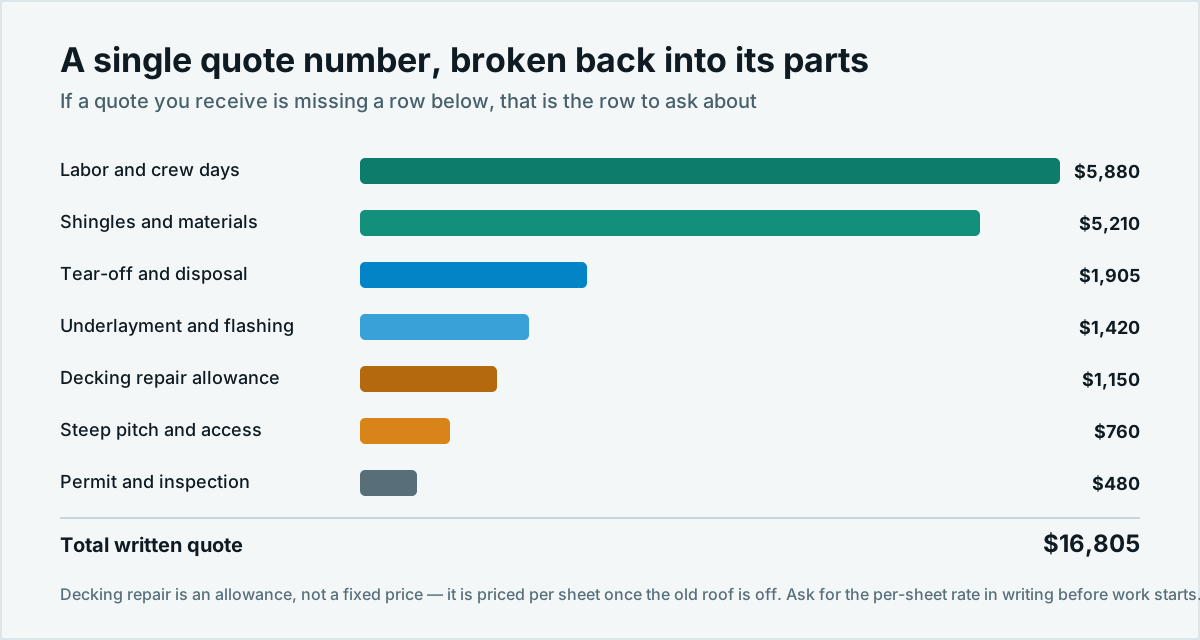
Each estimator asks for the measurements a real contractor would take, then shows the cost broken into line items — not a single averaged number you cannot check.
Homeowners policies come in two shapes, and which one you hold changes the math entirely.
| Policy type | What it pays | Who it suits |
|---|---|---|
| Replacement cost value RCV |
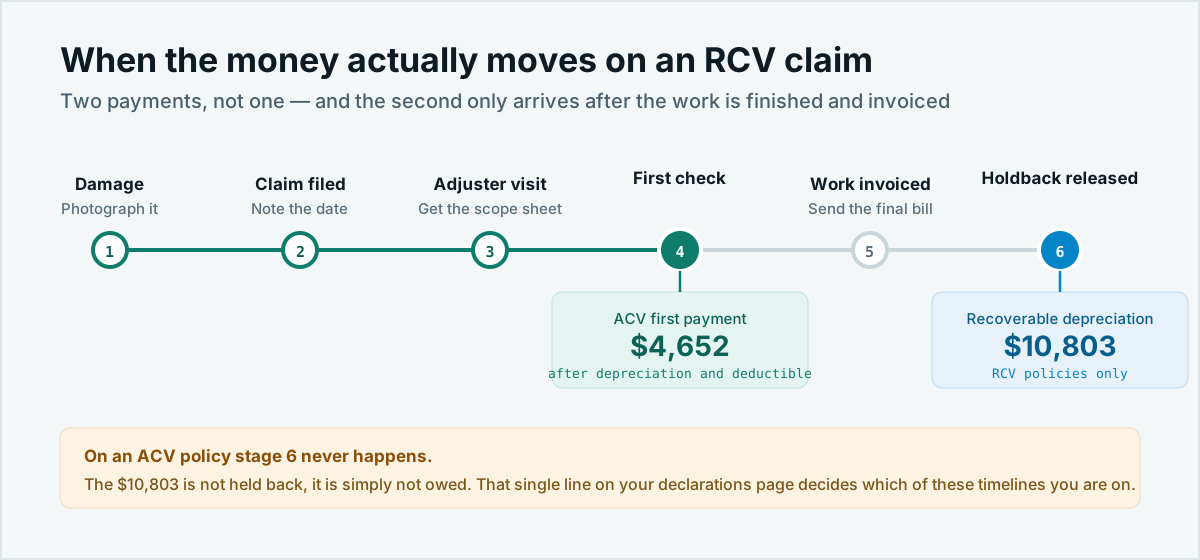
The full cost to replace, less your deductible. Depreciation is held back and released once the work is finished. | Almost everyone, if it is offered |
| Actual cash value ACV |
Replacement cost minus depreciation for age and wear. On an older roof that can be most of the value. | Cheaper premium, far bigger bill at claim time |
Four inputs, no email, nothing sent anywhere. The arithmetic runs in your browser and is the same arithmetic printed above — you can check it on paper.
This is the example used throughout the page, followed end to end so every figure above can be traced back to an input.
Illustrative worked example built from published pricing ranges and the depreciation model documented in the methodology. It is not a real customer file, a quote, an appraisal or a coverage determination.

These calculators estimate individual home projects. Adding a roof, windows and HVAC does not produce a complete dwelling reconstruction estimate: structure, demolition, design, code upgrades and other work may still be missing.
For dwelling insurance, ask your insurer for a reconstruction estimate using your home's features. A sale price includes location and land value; it is a different number. For a specific project, start with the relevant calculator and compare written local quotes.
Every estimate here shows its own working: the measurements used, the multipliers applied, and the depreciation assumption. If a number looks wrong you can see exactly which input produced it and change it.
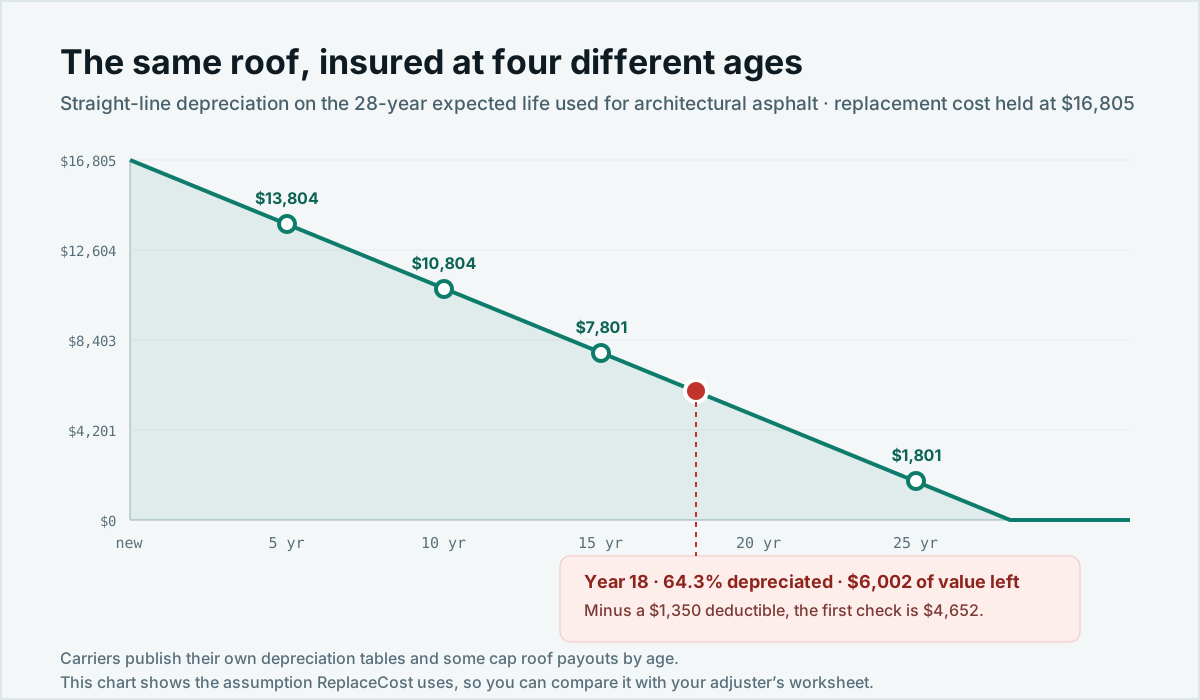
What it cannot do is bind coverage or replace a written quote. Insurers use their own depreciation schedules and some cap payouts by roof age. Contractors price by what they see on the roof. Treat these figures as a way to judge whether the numbers you are being given are reasonable — not as the numbers themselves.
Calculator results separate measurements, unit costs, labor, depreciation and deductibles so each assumption can be compared with written quotes and policy documents.
Use the calculators for a planning range, then use these plain-language guides to check scope, permits, assistance, financing and coverage.
Mantu Kumar maintains the formulas, source trail, result explanations and corrections. Each calculator now shows its review date and relevant public references.
Homeowners write in with the written quotes and carrier worksheets that sit behind the ranges on this site. Those messages, and the corrections that come out of internal review, are the only things that will ever appear in this section. Corrections are published whether or not anyone else noticed them.
Homepage quick-check disagreed with the full claim gap tool. The inline checker on this page applied straight-line depreciation without the 80% cap that the full tool and the published methodology both use. For items past 80% of their expected life it therefore returned a first check that was too low — a 25-year roof on a 28-year life was understated by about $1,560. Found in internal review, corrected the same day. Younger items were unaffected.
A worked-example figure was mislabelled. A card in the guides grid described the claim gap as $10,804. That figure is the depreciation holdback; the gap between the $16,805 quote and the $4,652 first check is $12,153. The label was wrong, not the calculation. Corrected.
No reader quotes published yet. No reader has given permission to be quoted so far. When that happens it will appear here with a name, a state and a date — and not before.
Review or
AggregateRating structured data. Self-issued review markup is against Google’s
rules and would not be honest here anyway.No. Nothing is stored and nothing is sent. The calculation runs in your browser.
Published contractor pricing and materials data, adjusted by region. Each estimator lists its assumptions underneath the result so you can check them against quotes you have been given.
It can, and it depends on the carrier, the cause of damage and your claims history. A storm claim is generally treated differently from a wear-and-tear claim. Ask your agent what a claim of this size would do to your renewal before you file — they can usually tell you.
Start with the physical item being replaced: roof, solar, HVAC, windows, water heater, siding, gutters or flooring. Then take its midpoint or your contractor’s written replacement figure to the Claim gap calculator to compare an ACV first check with an RCV settlement.
Actual cash value subtracts depreciation for age and condition. An older item can therefore produce a much smaller first check even when today’s labor and material cost is high. The calculators show the assumed lifespan and depreciation percentage instead of hiding that step.
No. The animation helps explain the result: line items arrive in order, figures count up, and the payout bar separates the insurer’s share from yours. The arithmetic is the same when reduced-motion is enabled, and the final numbers remain visible without animation.
Every insurance-aware estimator includes a deductible input. It is applied after depreciation to the first ACV check and remains your share on a completed RCV claim. Your policy language controls the real settlement.
Yes. That is the best time to use them. The itemized range gives you a scope checklist and helps you spot a quote that omits removal, disposal, permits, access or related repairs. Always compare it with two or three local written quotes.
Each tool itemizes the work, shows a planning range, and explains how age, depreciation and your deductible can change the insurance check.
Planning summary: Start with the physical replacement estimator, then run the Claim gap tool with the replacement figure, item age, expected life and deductible from your declarations page. The result is a planning estimate — not a contractor quote or coverage decision.


