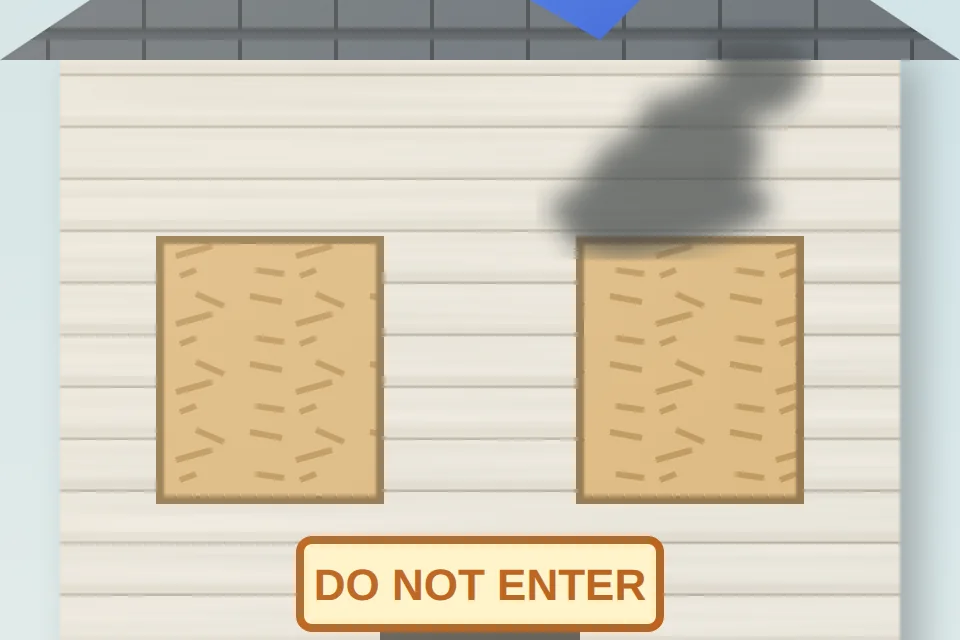
Document why you cannot stay
Loss of use starts when the house is unfit to live in. A note from the fire department, the restoration company or the adjuster settles it.
Home › Loss of use
Coverage D · Hotel · Temporary rent · Extra living costs · Time limitWhen a fire or storm makes the house unlivable, loss of use (Coverage D) pays the increase in what it costs your household to live: the hotel, then a rental, the extra restaurant meals, laundromat and mileage, and moving and storage. It does not pay the mortgage you were already paying. The limit is usually 20% to 30% of Coverage A, and many policies add a 12- or 24-month time limit. A nine-month kitchen rebuild with a $2,600 rental uses about $33,000; a total loss can use it all.
Reviewed 25 October 2026 · Written by Mantu Kumar
See the illustration · See the live cost diagram · Open the calculator
Policy terms vary. Your declarations page shows the Coverage D amount; the policy form shows any time limit.
2026 planning ranges
Typical time out: Kitchen fire: 2–4 months Structural fire: 6–12 months Total loss: 12–24 months+
Diagram, part by part
The loss of use drawing above has 9 numbered parts, from Hotel nights to When the limit runs out. Each card below frames one of them, and after you run the calculator it shows what that part adds to your estimate.
While you look for a rental, hotel nights are usually the costliest part of the stay per day. Insurers pay for comparable lodging, so a suite may be reasonable for a large family.
What moves it: Number of nights, the nightly rate and the size of your household.
On the quote: Keep every hotel folio and ask the adjuster to approve the nightly rate in writing.
Temporary rent is paid only above any housing cost that stops while you are out. Owners who are still paying a mortgage get the full rent covered, because the mortgage does not stop.
What moves it: Monthly rent, months out and which of your housing costs stop.
On the quote: Ask whether the insurer pays the landlord directly and how a lease longer than the repair is handled.
Extra food, laundry and mileage are paid as the increase over your normal monthly spending, for example restaurant meals in a hotel without a kitchen or a longer commute.
What moves it: Your normal monthly costs and what they become while displaced.
On the quote: Keep a log and bank statements that show the before and after spending.
Moving, storage, furniture rental, utility hookups and deposits are one-time costs that belong in the claim.
What moves it: Household size, distance and how long items are stored.
On the quote: Ask whether deposits must be returned to the insurer when you move back.
Often 20% of Coverage A
Coverage D, additional living expense, is capped by a dollar limit, often 20% to 30% of the dwelling limit. The calculator compares your total stay with that limit.
What moves it: Your Coverage A limit and the percentage on your declarations page.
On the quote: Check the dollar limit on your declarations page.
Can end coverage early
Some policies also stop paying after 12 or 24 months, even if money is left under the dollar limit. A large rebuild delayed by permits or contractor shortages can run past it.
What moves it: Your policy wording and how long the rebuild takes.
On the quote: Check for a time limit, and ask whether an extension applies after a declared disaster.
Subtracted from the rent
Costs you no longer pay while displaced, such as rent on the damaged home or some utilities, are subtracted from what the insurer reimburses. Mortgage, taxes and insurance usually continue and are not subtracted.
What moves it: Whether you rent or own and which bills stop.
On the quote: List which bills stopped and which continued, with statements.
Ask for an advance
Many insurers will advance a portion of additional living expense at the start of a claim so you are not paying everything out of pocket. After that, costs are reimbursed from receipts, usually monthly.
What moves it: Your insurer's process and how quickly you submit receipts.
On the quote: Ask for an advance and submit receipts every month instead of all at the end.
Shown in your result
If the stay costs more than Coverage D, the difference is yours. Choosing a less expensive rental, moving from a hotel sooner or pressing the contractor on schedule can keep the stay within the limit.
What moves it: Months out, monthly rent and the dollar limit.
On the quote: Ask the adjuster for a written running total of what has been paid against Coverage D.
Displaced
Most families spend the first two or three weeks in a hotel while they look for a rental near school and work. That stretch is the most expensive part of the stay per day, and the time when receipts are easiest to lose.

Three costs to track from the first night. These close-ups are crops of the same AI-generated illustration.
Loss of use starts when the house is unfit to live in. A note from the fire department, the restoration company or the adjuster settles it.

Moving, storage, deposits, furniture rental and utility hookups are real costs. Keep them in one folder with receipts.

Insurers pay for comparable housing. A rental of similar size near school and work is easy to justify; an upgrade is not.
| Cost | Usually paid | Notes |
|---|---|---|
| Hotel or short-term rental | Yes | Comparable to your home |
| Temporary rent | Yes | Above any housing cost that stops |
| Extra food over your normal grocery bill | The increase | Restaurant meals while in a hotel |
| Laundry, extra mileage, parking | The increase | Keep a mileage log |
| Pet boarding | Often | If the rental will not take pets |
| Moving, storage, deposits | Usually | Deposits may need to be returned |
| Your mortgage, insurance, property tax | No | You would pay these anyway |
The test is always the same: what are you paying now that you would not be paying if the house were fine? That is why the calculator asks for your normal monthly food, utility and commute costs as well as what you spend while displaced. Renters whose lease stops after a fire are paid only the difference between the old rent and the new one.
The dollar limit is printed next to Coverage D on the declarations page. On many forms it is a set share of the dwelling limit, often 20% or 30%. The time limit is in the policy wording. Some policies pay for the “shortest time required to repair or replace,” and some cap it at 12 or 24 months. You can hit either one first: a high-rent city can use up the dollars in a year, and a slow permit office can run out the clock with money left.
| Line | Amount |
|---|---|
| Hotel, 21 nights at $160 | $3,360 |
| Temporary rental, 8.3 months at $2,600 | $21,580 |
| Extra food, laundry and mileage, $600 a month | $5,400 |
| Moving, storage and deposits | $2,500 |
| Additional living expense | $32,840 |
With a $350,000 dwelling limit and Coverage D at 20%, the limit is $70,000 and the stay fits with room to spare. Stretch the same rebuild to 15 months on a policy with a 12-month time limit and about $9,600 of the last three months falls on you.
Coverage D is usually set as a percentage of Coverage A. These are the dollar limits that result at three common dwelling limits.
| Coverage A | 10% | 20% | 30% |
|---|---|---|---|
| $250,000 | $25,000 | $50,000 | $75,000 |
| $400,000 | $40,000 | $80,000 | $120,000 |
| $600,000 | $60,000 | $120,000 | $180,000 |
At $4,000 a month for a rental and extra living costs, a $50,000 limit lasts about a year; a $25,000 limit lasts about six months.
Coverage D pays on receipts, so a simple file each month keeps payments moving.
| Stage | Typical time | What happens |
|---|---|---|
| Move out | Day 1 | Hotel or family while the home is unsafe. |
| Advance | First week | Ask the insurer for an advance payment. |
| Temporary rental | 1 – 4 weeks | Find a comparable rental for longer repairs. |
| Monthly reimbursement | Each month | Send receipts and the extra-costs log. |
| Move back | When repairs finish | Final receipts and deposit returns. |
If the rebuild is delayed, tell the insurer early and show why, especially when a time limit applies.
The dollar limit goes further when the stay is planned early.
These patterns usually mean the stay will outlast the limit.
The increase in living costs while your home is unlivable after a covered loss: hotel or rental, extra food, laundry, mileage, pet boarding, moving and storage. It does not pay costs you would have had anyway, such as your mortgage.
Often 20% to 30% of the dwelling limit. On a $350,000 dwelling that is $70,000 to $105,000. Your declarations page shows the exact amount.
Many policies stop paying after 12 or 24 months, or after the shortest reasonable time to repair. Some states require longer periods after declared disasters.
Usually not. The deductible is taken once from the property damage part of the claim.
Many insurers can pay a landlord or a temporary housing company directly. Others reimburse you monthly. Ask early so you are not carrying months of rent on a card.
You can claim the extra costs you actually have, such as added mileage or groceries. Some insurers will discuss a reasonable payment to the family hosting you.
Yes, renters insurance includes loss of use. It pays the difference between your old rent and your temporary housing, plus other increased costs.
Every receipt, a mileage log, and proof of what you normally spent on food and utilities before the loss, such as a few months of bank statements.
Yes, if the damage from a covered loss makes the home unfit to live in, even temporarily, such as no kitchen, no water or smoke contamination. If you can safely stay, it usually does not pay.
Reasonable extra costs such as pet boarding when a hotel does not allow pets are often accepted as additional living expenses. Ask the adjuster first and keep the receipts.
Usually only while you move from one to the other. Overlapping costs must be reasonable and short.
If you rent out part of your home and a covered loss makes it unrentable, fair rental value pays the rent you lose, minus expenses that stop. It is part of Coverage D on many policies.
Many policies pay additional living expenses for a limited time, often two weeks, when a civil authority prohibits use of your home because of nearby damage from a covered peril.
Delays outside your control usually still count, but the dollar and time limits still apply. Keep records of contractor schedules and permit delays to show the insurer.
Some insurers let you raise the percentage or buy extended coverage at renewal. It is worth considering if you live where rebuilds after disasters take a long time.
No. Mortgage, property taxes and insurance continue whether you live there or not, so they are not additional living expenses. Coverage D pays the extra costs on top of them.
Extra utility costs at a temporary home are often covered as additional living expenses, minus the utilities you no longer pay at the damaged home.
Extra laundry costs while you are displaced, such as laundromat fees when the rental has no washer, are commonly reimbursed with receipts.
Renting an RV or trailer parked at your home can be accepted as reasonable temporary housing, especially in rural areas. Get the insurer's approval and the rental terms first.
Use the companion calculators when the job touches another part of the house or the claim.
Planning topics covered in the calculator and guide above.