Home › Wildfire home hardening
Wildfire · ember resistanceWildfire home hardening cost calculator
Research on homes lost in wildfires keeps finding the same thing: most houses do not burn because a wall of flame reaches them. They burn because wind-blown embers land in a gutter full of needles, slip through a vent into the attic, or light the mulch and fence boards touching the wall. Hardening a home means closing those small entry points.
The most effective steps are often modest in cost. Ember-resistant vents, gutter guards or metal gutters, boxed-in eaves, and a five-foot band of gravel or pavers around the house with no plants, mulch or wood fence attached. A Class A roof matters most of all, but it is a roofing job; this page sends you to the roof calculator for that rather than re-pricing it here.
Pick the measures you want, enter the eave and wall lengths, and the calculator prices each one. It defaults to vents, gutters and the 0–5 ft zone, the three steps many wildfire programs list first. Crew clearance of limbs and debris is shown as maintenance, not construction.
Reviewed 25 October 2026 · Written by Mantu Kumar
See the photos · See the cost diagram · Open the calculator
Key facts at a glance
- Ember-resistant vents: about $800–$2,800 for a typical house.
- Gutter guards or noncombustible gutters: about $12–$28 per foot of eave.
- Enclosed eaves: about $8–$22 per foot. Noncombustible 0–5 ft zone about $25–$75 per foot of wall.
- Fence section at the house: about $400–$1,800. Deck underside enclosure about $800–$4,000.
- Crew clearance: about $400–$1,600 per visit, as ongoing maintenance.
National 2026 planning ranges before your regional multiplier. Insurer and state programs may offer discounts or grants; none is applied.
2026 planning ranges
- 1Class A roof (roof tool)
- 2Ember-resistant vents
- 3Gutter guards
- 4Enclosed eaves
- 50–5 ft zone
- 6Fence at the house
- 7Deck underside
- 8Crew clearance (maintenance)
- 9Tempered dual-pane windows
Price your wildfire hardening
No email · nothing sentDiagram, part by part
Wildfire hardening: every numbered part explained
The drawing above has 9 numbered parts, from Class A roof to Dual-pane tempered windows. Each card zooms in on one part, says what pushes its price up or down, and tells you what to look for on a written quote. After you run the calculator, the parts in your scope show their dollar band.
1 Class A roof
Priced on the roof calculator
The roof is the largest surface embers land on. Class A assemblies, such as asphalt shingles over the right underlayment, metal, tile and some treated products, resist burning brands best. Wood shake roofs are the biggest single risk.
What moves it: Roof material, underlayment and gaps at ridges and edges where embers lodge.
On the quote: If the roof is near replacement, choose a Class A assembly and ask about ember-resistant ridge and edge details.
2 Ember-resistant vents
$800–$2,800
Attic, crawl space and soffit vents are open doors for embers. Replacing them with tested ember-resistant vents, or covering them with fine metal mesh (1/8 inch or smaller), keeps embers out while still venting the attic.
What moves it: Number and type of vents, roof access and whether tested products are required locally.
On the quote: Ask for tested vents where required, and count every gable, soffit, foundation and dryer vent.
3 Gutter guards or noncombustible gutters
$12–$28 per foot
Gutters full of leaves and needles catch embers like a fire starter laid along the roof edge. Metal gutters with noncombustible guards reduce the fuel; regular cleaning still matters.
What moves it: Eave length, gutter type and guard style.
On the quote: Choose metal guards and gutters, and plan for cleaning before fire season.
4 Enclosing open eaves
$8–$22 per foot
Open eaves with exposed rafters trap heat and embers. Boxing them in with noncombustible or ignition-resistant soffit material removes those pockets.
What moves it: Eave length and material.
On the quote: Make sure the new soffit includes ember-resistant vents where attic venting is needed.
5 Noncombustible 0–5 ft zone
$25–$75 per foot of wall
The first five feet around the house should hold nothing that can burn: no bark mulch, shrubs, wood piles or stored items. Gravel, pavers or bare soil, with plants moved farther out, is the target.
What moves it: Wall length, existing landscaping and hardscape choices.
On the quote: The quote should include removal of mulch and plants, and the new surface material.
6 Fence section that touches the house
$400–$1,800
A wood fence attached to a house acts like a wick, carrying fire straight to the wall. Replacing the last few feet with metal or masonry breaks that path.
What moves it: Fence height and material, and gate placement.
On the quote: Ask for a noncombustible section of at least five feet where the fence meets the house.
7 Deck underside enclosure
$800–$4,000
Embers collect under decks among dry leaves and stored items. Enclosing the underside with noncombustible material or fine mesh, and keeping it clear, protects the deck and the wall above it.
What moves it: Deck size and height, and access for cleaning.
On the quote: Keep the area under the deck clear even after enclosing it.
8 Crew clearance of debris and limbs
$400–$1,600
Removing branches over the roof, dead plants and debris is ongoing maintenance rather than hardening construction, but it is often the cheapest risk reduction there is.
What moves it: Tree size and access, and disposal.
On the quote: Ask for limbs at least 10 feet from the roof and chimney where possible.
9 Dual-pane tempered windows
Priced on the windows tool
Radiant heat can break single-pane glass and let embers inside. Dual-pane windows with at least one tempered pane hold up much longer, and metal mesh screens keep embers off the glass.
What moves it: The number and size of windows facing the fire risk.
On the quote: Ask whether the windows have a tempered pane and meet your local wildfire code.
Project photo guide
Wildfire home hardening in photos: ember-resistant vents, Zone 0 gravel and gutter guards
Most homes lost in wildfires ignite from windblown embers entering attic vents, igniting mulch or leaves right against the siding, or catching debris in open gutters—not from a wall of flame. Hardening focuses on those exact ember entry points first.

How the job works in 3 key stages
All three step images are AI-generated illustrations for explanation. Not a site inspection, bid, or coverage decision.
 Step 01
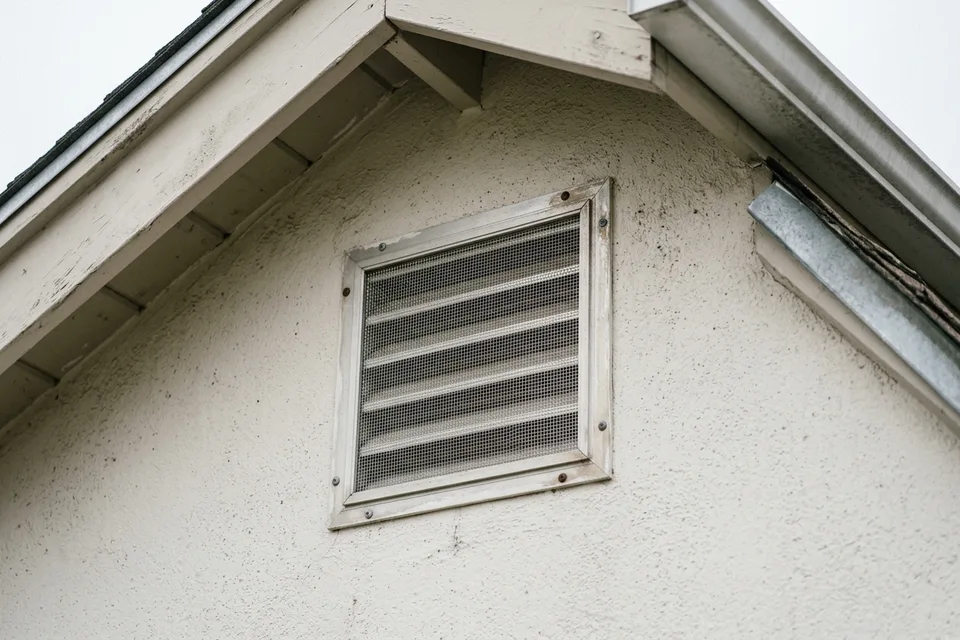
Ember-resistant vents
Standard 1/4-inch attic, gable, soffit, and crawl-space screens let glowing embers blow straight into the framing; retrofitting 1/8-inch corrosion-resistant metal mesh or ASTM E2886 flame- and ember-resistant vents blocks them.
On the quote: Count every gable, soffit, ridge, foundation, and dryer vent on the house and confirm whether the quote uses 1/8-inch metal mesh or listed ember-resistant baffle vents.
 Step 02
Defensible space
Zone 0—the first 0 to 5 feet from the siding, deck, and stairs—is stripped of bark mulch, woody shrubs, and stored firewood, then finished with crushed stone, pavers, or bare mineral soil and a noncombustible fence gate.
On the quote: Make sure any wood fence touching the house is replaced with a 5- to 8-foot metal gate or masonry section so a burning fence cannot wick fire onto the wall.
 Step 03
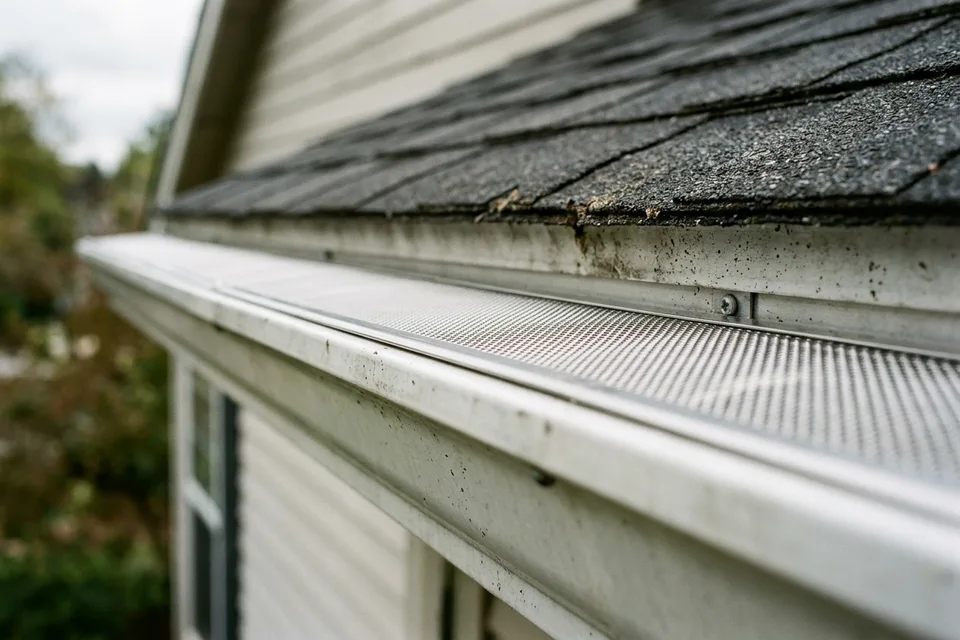
Gutters and roof edge
Along the roof edge, metal drip edge and noncombustible stainless micro-mesh gutter guards stop dry pine needles and leaves from collecting where windblown embers land next to the fascia.
On the quote: Verify that gutter guards use aluminum or stainless-steel mesh rather than plastic or vinyl screens that melt or burn when embers land on them.


What this photo guide helps you verify on a written quote
- Start with vents, gutters & Zone 0: You do not need to re-side or re-window the entire house to cut ember ignition risk dramatically—the low-cost bundle comes first.
- Noncombustible gutter guards: Vinyl gutters and plastic leaf guards can melt and drop burning debris into Zone 0; specify metal gutters and metal micro-mesh.
- Wood fence attachment: Replacing just the last 5 feet of wood fence next to the house with a metal gate breaks the direct fuel path to the siding.
- Wildfire mitigation documentation: Keep before-and-after photos and invoices for state wildfire-preparedness certificates (such as IBHS Wildfire Prepared Home) and insurer renewals.
On this page
- The diagram, part by part
- Photo guide: hero and 3 project steps
- Wildfire hardening cost by measure
- What common hardening packages cost
- Where to start with a limited budget
- Signs your home needs hardening
- Wildfire home hardening cost by region
- What “Noncombustible 0–5 ft zone” does to the price
- What “Gutter guards or noncombustible gutters” does to the price
- How age changes the wildfire home hardening claim payout
- How to read the quote, line by line
- How long the job takes
- Worked example
- Wildfire hardening and insurance
- Ways to keep the cost down
- Sources and further reading
- Frequently asked questions
Wildfire hardening cost by measure
Measures are priced separately so you can start with the cheapest high-impact steps.
| Scope | 2026 planning range | Why it is its own line |
|---|---|---|
| Ember-resistant vents | $800 – $2,800 | Typical house. |
| Gutter guards or metal gutters | $12 – $28 per ft of eave | Keeps fuel out. |
| Enclose eaves | $8 – $22 per ft | Box in open rafters. |
| 0–5 ft noncombustible zone | $25 – $75 per ft of wall | Gravel or pavers. |
| Fence section at the house | $400 – $1,800 | Metal or masonry. |
| Deck underside enclosure | $800 – $4,000 | Mesh or noncombustible skirting. |
| Crew clearance | $400 – $1,600 | Per visit, maintenance. |
| Class A roof | Roof calculator | Not repriced here. |
Some states and insurers recognize mitigation programs, such as IBHS Wildfire Prepared Home in parts of the West, with discounts. Check what applies to you.
What common hardening packages cost
Four typical packages at the national average for a 2,000 sq ft house with 160 ft of eave and wall.
| Job | Planning range | Midpoint |
|---|---|---|
| Vents, gutters and the 0–5 ft zone The common first steps. | $6,720 – $19,280 | $13,000 |
| Vents and gutters only Lowest cost start. | $2,720 – $7,280 | $5,000 |
| Full package except roof All measures on this page. | $9,600 – $30,200 | $19,900 |
| Zone 0 and crew clearance Landscape-first plan. | $4,400 – $13,600 | $9,000 |
Each row is this page’s calculator run with the inputs described, at the national average. Change the region and the inputs above to see your own numbers.
Where to start with a limited budget
Many wildfire programs suggest working from the roof down and the house out. Small, cheap steps near the house often matter more than big projects farther away.
| Option | Best when | Watch out for |
|---|---|---|
| Clean roof and gutters, clear 0–5 ft | Any budget; do it every year. | Needs repeating. |
| Ember-resistant vents | Every house with open vents. | Must balance attic ventilation. |
| Gutter guards and enclosed eaves | Homes with trees nearby or open rafters. | Moderate cost. |
| Class A roof | Wood shake or old roofs. | Highest cost; separate project. |
Signs your home needs hardening
- Open or large-mesh vents in the attic, eaves or crawl space.
- Gutters that fill with needles or leaves.
- Bark mulch or shrubs against the walls.
- A wood fence attached to the house or firewood stacked next to it.
- Open eaves with exposed rafter tails.
- Branches over the roof or near the chimney.
Wildfire home hardening cost by region
The calculator's default wildfire home hardening job, repriced for each of its six regions. At the national average it runs $6,720 – $19,280; South / Lower Midwest is the lowest at $5,846 – $16,774, and West Coast metro is the highest at $8,736 – $25,064, a gap of about $5,590 at the midpoint.
| Region | Planning range | Midpoint |
|---|---|---|
| National average | $6,720 – $19,280 | $13,000 |
| South / Lower Midwest | $5,846 – $16,774 | $11,310 |
| Mountain / Plains | $6,384 – $18,316 | $12,350 |
| Mid-Atlantic / Upper Midwest | $7,526 – $21,594 | $14,560 |
| Northeast metro | $8,467 – $24,293 | $16,380 |
| West Coast metro | $8,736 – $25,064 | $16,900 |
What “Noncombustible 0–5 ft zone” does to the price
Every other input stays at its default and only “Noncombustible 0–5 ft zone” changes. The cheapest choice, Off, comes to $2,720 – $7,280; the most expensive, On, comes to $6,720 – $19,280.
| Choice | Planning range | Midpoint vs default |
|---|---|---|
| Off | $2,720 – $7,280 | −$8,000 |
| On (default) | $6,720 – $19,280 | — |
What “Gutter guards or noncombustible gutters” does to the price
Every other input stays at its default and only “Gutter guards or noncombustible gutters” changes. The cheapest choice, Off, comes to $4,800 – $14,800; the most expensive, On, comes to $6,720 – $19,280.
| Choice | Planning range | Midpoint vs default |
|---|---|---|
| Off | $4,800 – $14,800 | −$3,200 |
| On (default) | $6,720 – $19,280 | — |
How age changes the wildfire home hardening claim payout
Using the default job, a $1,000 deductible and a 20-year expected life. At 10 years old, about $6,500 is held back as depreciation; a replacement cost policy releases it after the work is finished, while an actual cash value policy keeps it.
| Age | Wear | First check | Held back |
|---|---|---|---|
| 2 years | 10% | $10,700 | $1,300 |
| 5 years | 25% | $8,750 | $3,250 |
| 10 years | 50% | $5,500 | $6,500 |
| 15 years | 75% | $2,250 | $9,750 |
| 20 years | 80% | $1,600 | $10,400 |
| 30 years | 80% | $1,600 | $10,400 |
How to read the quote, line by line
Hardening quotes should name tested products and measurements.
- Vent count and product. Tested ember-resistant models or mesh size.
- Gutter and guard material. Metal, not plastic.
- Eave material. Noncombustible or ignition-resistant.
- 0–5 ft scope. What is removed and what goes down.
- Fence and deck details. Length and material.
- Program paperwork. If you want a certification or discount.
- Cleanup. Debris hauled away.
How long the job takes
| Stage | Typical time | What happens |
|---|---|---|
| Assessment | 1 – 2 hours | Walk-around or program inspection. |
| Vents and gutters | 1 – 2 days | Often one crew. |
| Eaves | 2 – 5 days | Depends on length. |
| 0–5 ft zone | 1 – 3 days | Landscaping crew. |
| Annual maintenance | Before fire season | Clean roof, gutters, zone. |
Schedule work in spring. Contractors and landscapers book up as fire season approaches.
Worked example
A 2,000 sq ft house in a wildland-urban interface area with an asphalt shingle roof that is already Class A. The owner starts with vents, gutter guards and a gravel band around the house.
Vents, gutter guards and a 0–5 ft zone
Worked example| Line item | National planning range |
|---|---|
| Gutter guards or noncombustible gutters | $1,920 – $4,480 |
| Ember-resistant vents | $800 – $2,800 |
| Noncombustible 0–5 ft zone | $4,000 – $12,000 |
| Total before regional adjustment | $6,720 – $19,280 |
Midpoint about $13,000. Enclosing the eaves on the same 160 ft would add about $1,280–$3,520.
Wildfire hardening and insurance
Hardening is an improvement, not a claim. In some states, insurers must consider wildfire mitigation when pricing policies, and programs like IBHS Wildfire Prepared Home can lead to discounts where insurers recognize them. Availability and savings vary widely.
Keep receipts and photos, and ask your insurer which measures they recognize before you start.
What this page will not claim
- Roof replacement cost; use the roof calculator.
- Your insurance discount or eligibility.
- Defensible space beyond the house and fence.
- That any measure makes a home fireproof.
Ways to keep the cost down
Hardening costs can be spread over time.
- Start with the cheapest. Vents and gutters first.
- Clear the 0 to 5 foot zone. Low cost, big effect.
- Replace at end of life. Class A roof when reroofing.
- Check grant programs. Some states fund hardening.
- Ask insurers about credits. Some offer discounts.
- Maintain yearly. Debris clearance.
Sources and further reading
- IBHS — Wildfire Prepared Home
- NFPA — Firewise USA
- CAL FIRE — Ready for Wildfire
- U.S. Fire Administration — Wildland urban interface
Prices on this page are planning ranges built from public 2026 US cost guides and contractor rate sheets, widened where they disagreed, and multiplied by the same regional index as every other ReplaceCost calculator. Rules and definitions come from the agencies listed. See the methodology for how ranges are set and reviewed.
Frequently asked questions
How much does wildfire home hardening cost?
Common first steps, vents, gutter guards and a 0–5 ft zone, often run about $6,700 to $19,300 for a 2,000 sq ft house. Costs rise with eave length and options.
What is the most important wildfire upgrade?
A Class A roof, followed by ember-resistant vents and a clear 0–5 ft zone around the house.
What is zone 0?
The first five feet around the house, kept free of anything that can burn.
Do ember-resistant vents reduce attic ventilation?
Tested vents are designed to keep airflow while blocking embers. Fine mesh can reduce airflow, so vent area may need to increase.
Will hardening lower my insurance?
In some states and with some insurers, yes, especially with a recognized program certification.
Should I remove my wood fence?
Usually just the section within five feet of the house, replaced with metal or masonry.
Are gutter guards enough?
They help, but gutters still need cleaning. Metal guards and gutters are best.
How often should I clear debris?
At least once a year before fire season, and after storms.
What is defensible space?
Defensible space is managed vegetation in zones around the home, with the closest five feet kept nearly free of fuel. It slows fire and gives firefighters room to work.
Are composite decks fire resistant?
Some composite and PVC products carry fire ratings, but many still burn or melt. Check the product's rating for your area and enclose or clear the space under the deck.
Do sprinklers help?
Exterior sprinklers may help in some cases, but they depend on water pressure and power during a fire. Ember-resistant vents, a Class A roof and cleared surroundings come first.
What vents resist embers?
Vents with fine metal mesh or baffles that are tested for ember and flame resistance. Some codes require specific ratings in high fire-hazard areas.
Should I replace a wood shake roof?
Untreated wood shakes are one of the biggest wildfire risks. Replacing them with a Class A roof assembly is often the most important single upgrade.
What is a noncombustible zone?
The first five feet around the house, kept free of mulch, plants and stored items that can burn, often using gravel, pavers or bare soil.