Home › Demolition
Structure · tear-out and haul-awayDemolition and debris removal cost calculator
Safety first. Pre-1980 homes frequently contain asbestos in floor tile, mastic, pipe wrap, or joint compound and lead-based paint on trim and plaster; federal EPA RRP/NESHAP and OSHA rules require testing before demolition, and licensed contractors plus your local permit office govern structural teardowns and utility disconnects. Never dry-demolish suspected asbestos or lead materials.
Tearing out drywall, cabinets, and tile inside an occupied house is a manual selective-demolition job, whereas knocking down an entire building with an excavator is a permitted heavy-equipment project—never scale an interior-gut price to estimate a whole-house teardown. Stop here if your pre-1980 home has suspected or unknown asbestos or lead paint: hazardous materials are never priced inside a dumpster line, so stop and go to the asbestos removal calculator and the lead paint calculator for testing and licensed abatement first.
Across the United States in 2026, selective interior demolition labor runs $2.25 to $5.50 per square foot (plus $150 to $450 for zipper dust protection and $450 to $850 per 20-to-30-yard roll-off dumpster), putting a single room or wet basement strip at $1,100 to $2,900, a kitchen gut at $1,250 to $3,150, and a whole-house interior gut at $4,800 to $12,500.
For a permitted whole-house structural teardown with utility disconnects, excavator wrecking, and foundation removal, 2026 planning ranges run $10,500 to $28,500+ before rebuilding on the rebuild cost calculator.
Reviewed 25 October 2026 · Written by Mantu Kumar
See the photos · See the cost diagram · Open the calculator · Every part explained
Key facts at a glance
- Selective interior tear-out labor (stripping drywall, trim, cabinets, or non-bearing finishes down to bare studs while protecting structural framing) runs $2.25 to $5.50 per square foot.
- Each 20-yard or 30-yard roll-off construction & demolition (C&D) dumpster rental—including drop-off, haul-away, and 2 to 4 tons of clean landfill tipping fees—runs $450 to $850.
- Hazardous materials (asbestos tile/insulation or lead-based paint in pre-1980 homes) are prohibited in standard C&D dumpsters under EPA NESHAP and RRP rules and must be priced separately on the asbestos removal calculator and the lead paint calculator.
- A permitted whole-house mechanical demolition (excavator teardown) is a distinct heavy-equipment scope running $5.50 to $11.50 per square foot, plus $900 to $2,800 for street-level utility disconnects and $2,500 to $6,500 if breaking and hauling away the concrete foundation.
- Under the common HO-3 form, debris removal after a covered loss is paid inside the dwelling limit, and if damage plus debris removal exceeds that limit, an additional 5% of the limit is often available for debris.
National 2026 planning ranges before your regional multiplier. Sources and method are at the bottom of the page.
2026 planning ranges
- 1What comes out
- 2Dust protection
- 3Tear-out labor
- 4Dumpster and tonnage
- 5Hazardous stop
- 6Utilities disconnected
- 7Foundation
- 8Rebuild handoff
- 9Permit and inspection
Price your demolition and debris removal
No email · nothing sentDiagram, part by part
Demolition and debris removal: every numbered part explained
The drawing above has 9 numbered parts, from What comes out to Permit and inspection. Each card zooms in on one part, says what pushes its price up or down, and what to check on a written quote. After you run the calculator, the parts in your scope show their dollar figure.
1 What comes out
Scoped by room, kitchen, wet basement, whole interior, or whole house
Selective interior demolition strips out non-structural finishes—drywall, plaster, fiberglass insulation, kitchen cabinets, countertops, bathroom tile, carpet, and trim—while leaving the structural wood wall studs, floor joists, and roof rafters clean and unharmed. By contrast, a whole-house demolition is a permitted heavy-equipment wrecking project where an excavator takes down the roof, walls, and framing together; you never scale an interior-gut rate to price a whole-house teardown.
What moves it: Whether the crew is hand-stripping interior finishes to bare studs or knocking down an entire building with an excavator.
On the quote: Make sure an interior-gut contract specifies pulling all drywall nails/screws from the studs so the framing is ready for new board.
2 Dust protection
$150 – $450 (interior demolition scopes)
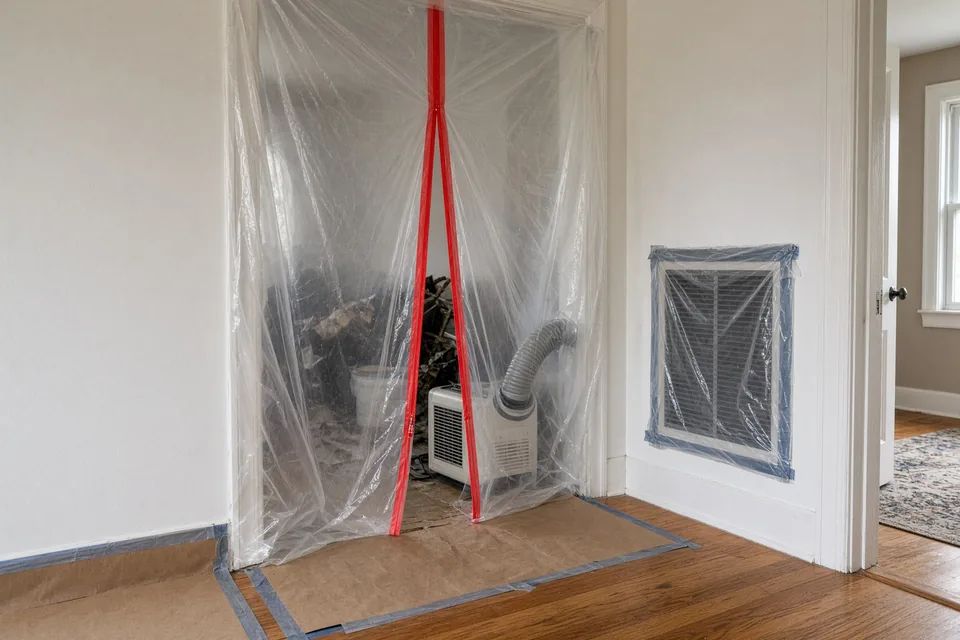
Prying off old drywall, plaster, and ceramic tile generates clouds of fine silica and gypsum dust that will coat every bedroom and clog your furnace blower if the work zone is not sealed off. Professional demo crews tape heavy 6-mil plastic sheeting with walk-through zipper doors across every hallway opening, seal HVAC supply and return vents in the room, lay Ram Board over the path to the front door, and run a portable HEPA air scrubber ($150–$450).
What moves it: Number of doorways connecting the demolition room to the occupied house and running a negative-air HEPA scrubber.
On the quote: Require that HVAC registers be taped shut and the thermostat fan turned off inside the work zone before demolition starts.
3 Tear-out labor
$2.25 – $5.50 / sq ft (selective interior) | $5.50 – $11.50 / sq ft (whole-house teardown)
Selective interior tear-out is 100% manual labor: workers pry off trim and cabinets, cut drywall into manageable sheets, chisel up tile, load wheeled trash carts, and carry debris down stairs (+18% for second-story work) to the driveway dumpster ($2.25–$5.50/sq ft). Whole-house teardown uses a tracked hydraulic excavator with a thumb attachment to crunch and load the structure directly into high-side dump trailers ($5.50–$11.50/sq ft).
What moves it: Drywall versus thick three-coat plaster over wood lath or mortar-bed ceramic tile, plus stair carries.
On the quote: If your house has pre-1960 plaster over wood or metal lath, tell the estimator upfront—plaster is twice as heavy and slower to strip than drywall.
4 Dumpster and tonnage
$450 – $850 per 20-to-30-yard roll-off C&D dumpster
Roll-off dumpster pricing has two parts: the container haul fee and the landfill scale house tipping fee per ton ($450–$850 per 20-or-30-yard container including 2 to 4 tons of clean construction and demolition debris). One room or a kitchen gut typically fills one 15-to-20-yard dumpster; a whole-house interior gut takes 2 to 4 dumpsters; and a whole-house teardown takes 4 to 8+ containers or semi-dump loads.
What moves it: Number of containers hauled and total weight in tons at the landfill scale.
On the quote: Ask how many tons of debris weight are included in each dumpster price and what the per-ton overage fee ($65–$120/ton) is.
5 Hazardous stop
$0 on this page (test first; see the asbestos removal calculator & lead paint calculator)
Hazardous materials are never priced inside a general construction dumpster line. In any house built before 1980, 9×9-inch vinyl floor tile, black mastic adhesive, vermiculite attic insulation, boiler pipe wrap, popcorn ceilings, and drywall joint compound may contain regulated asbestos, and painted woodwork or plaster likely contains lead-based paint. If your pre-1980 house has suspected or unknown materials, this calculator stops and sends you to the asbestos removal calculator and the lead paint calculator.
What moves it: Lab bulk-sample testing for asbestos (NESHAP/AHERA) and XRF/swab testing for lead paint (EPA RRP) before demolition.
On the quote: Never let a demolition crew smash pre-1980 tile, plaster, or popcorn ceilings without a negative lab asbestos test report in hand.
6 Utilities disconnected
$200 – $550 (interior room cap-off) | $900 – $2,800 (street-level whole-house disconnect)
Before swinging a prybar in a kitchen or bathroom, a plumber and electrician must shut off and cap water supply lines, plug open drain traps so sewer gas does not enter, and de-energize circuits in the wall ($200–$550). For a whole-house structural teardown, the city will not issue a wrecking permit until the gas utility pulls the gas meter, the electric utility drops the service wire, and a plumber excavates and caps the water and sewer lines at the street ($900–$2,800).
What moves it: Capping two pipes inside a kitchen wall versus excavating at the street curb to permanently sever water, sewer, and gas.
On the quote: On a whole-house teardown, start utility disconnect paperwork 3 to 6 weeks early—utility sign-off letters are the #1 bottleneck for wrecking permits.
7 Foundation
$0 (left in place) | $2,500 – $6,500 (break up, haul away & backfill on teardown)
On every interior gut (and on some whole-house rebuilds where an engineer certifies the existing foundation), the concrete slab or basement walls are left in place ($0). When a whole-house teardown requires removing the old concrete slab, stem walls, or full basement foundation so a new footprint can be dug, an excavator uses a hydraulic concrete breaker to pulverize the concrete, haul the clean rubble to a recycler, and compact clean fill dirt ($2,500–$6,500).
What moves it: Leaving an intact foundation in place versus breaking out a 4-inch slab or excavating a full 8-foot basement wall.
On the quote: If removing a basement foundation to build a new house in the same spot, require compacted structural engineered fill—never loose uncompacted dirt.
8 Rebuild handoff
$100 – $300 (interior demo permit) | $450 – $1,400 (whole-house wrecking permit)
Pulling the municipal demolition permit ($100–$300 for an interior gut; $450–$1,400 for a whole-house wrecking permit including silt-fence erosion control and rodent-baiting sign-off where required) clears the path for your reconstruction crew. Once the bare studs are exposed and inspected—or the lot is cleared—hand off your project to the rebuild cost calculator for whole-house reconstruction or the fire damage calculator and the water damage calculator for claim restoration.
What moves it: Municipal wrecking permit fees, tree-protection/silt fencing, and post-demolition site grading inspection.
On the quote: Verify that the demolition contractor's final payment is tied to passing the municipal open-stud or cleared-lot inspection.
9 Permit and inspection
$100 – $450
Interior demolition often needs a permit when walls, plumbing or electrical are touched, and a full teardown always does. Teardown permits usually require utility disconnect letters, pest control certification and silt fencing before work starts.
What moves it: Your town's rules and whether this is an interior gut or a full teardown.
On the quote: Ask who pulls the demolition permit and which inspections are included.
Project photo guide
Interior demolition in photos: containment, dumpster and utility caps
Clean demolition protects what stays while removing what goes. These four scenes show a kitchen gutted cleanly down to bare wood studs with plumbing capped, a plastic zipper dust containment wall with a HEPA air scrubber protecting the rest of the home, a 20-yard roll-off dumpster on driveway protection boards, and utility disconnect markings.

How the job works in 3 key stages
All three step images are AI-generated illustrations for explanation. Not a site inspection, bid, or coverage decision.
 Step 01
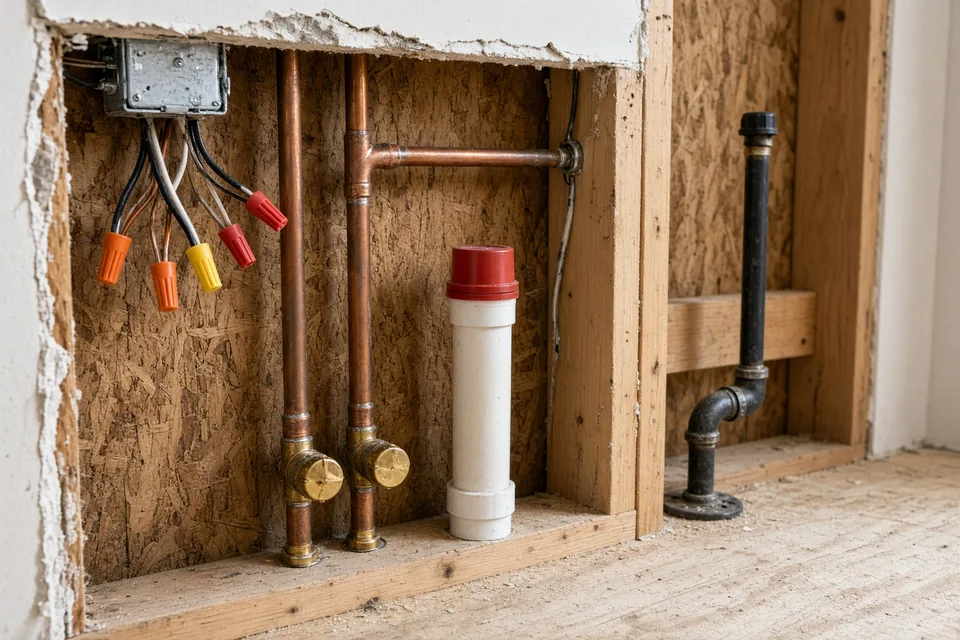
Test, then cap the utilities
After any pre-1980 materials are lab-cleared for asbestos and lead, water lines are capped, drains plugged and live circuits made safe so tear-out cannot cause a flood or a shock.
Why it matters: Capping water supplies, plugging sewer drains, and terminating live wires ($200–$550 interior; $900–$2,800 street disconnect) prevents floods and shocks during tear-out.
 Step 02
Contain the dust
Zippered 6-mil plastic walls, floor protection and a HEPA air scrubber keep dust inside the work zone and out of bedrooms and ductwork.
Why it matters: Plastic zipper containment walls and a HEPA air scrubber ($150–$450) keep gypsum and silica dust out of your occupied bedrooms and HVAC ductwork.
 Step 03
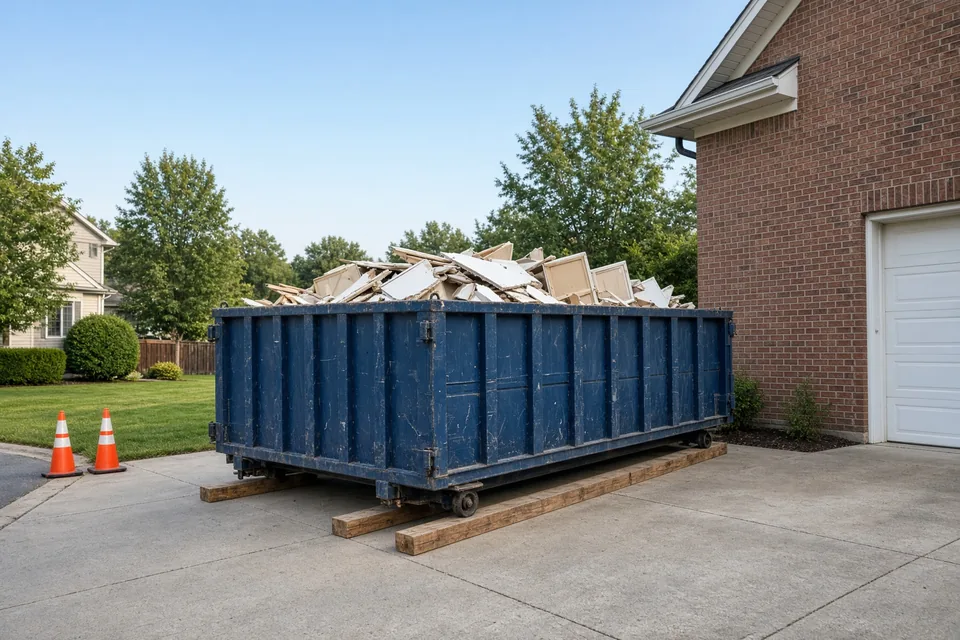
Haul the debris
Clean construction debris goes into a roll-off dumpster set on planks to protect the driveway; asbestos or lead waste must never ride in it.
Why it matters: Each 20-to-30-yard roll-off dumpster ($450–$850) holds 2 to 4 tons of clean construction debris—never hazardous asbestos or lead waste.


On this page
- The diagram, part by part
- Photo guide: hero and 3 project steps
- 2026 interior demolition & whole-house teardown cost table
- Three worked scenarios with full arithmetic
- Decision table: selective room/kitchen gut vs whole-interior gut vs whole-house teardown
- Mandatory pre-1980 asbestos & lead stop rule
- Quote checklist: 8 items to verify on a demolition estimate
- Typical demolition timeline
- Worked example
- Does insurance pay for demolition and debris removal?
- Sources and further reading
- Frequently asked questions
2026 interior demolition & whole-house teardown cost table
| Demolition Scope / Line Item | 2026 Low | 2026 High | What Changes the Price |
|---|---|---|---|
| Selective interior tear-out labor (one room, basement, whole interior) | $2.25 / sq ft | $5.00 / sq ft | Drywall/carpet ($2.25) vs thick wood-lath plaster or mortar tile ($5.00) |
| Kitchen gut tear-out labor (cabinets, counters, tile, floor, soffits) | $2.80 / sq ft | $5.50 / sq ft | $600–$1,350 minimum; heavy stone counters & tile floor |
| Whole-house structural teardown (excavator wrecking — permitted project) | $5.50 / sq ft | $11.50 / sq ft | Dedicated heavy-equipment rate; never scaled from interior-gut price |
| Second-story carry / high-reach surcharge | +18% | +18% | Carrying debris down stairs or window chutes |
| Plastic zipper dust containment, floor protection & HEPA scrubber | $150 | $450 | Interior gut scopes ($0 on whole-house teardown) |
| 20–30 yd roll-off C&D dumpster & clean landfill tonnage | $450 / dumpster | $850 / dumpster | Includes 2–4 tons of clean C&D debris (never hazardous materials) |
| Plumbing & electrical safe-off: Interior ($200–$550) · Street cut ($900–$2,800) | $200 | $2,800 | Room valve/circuit cap vs street sewer/water/gas/electric disconnect |
| Concrete foundation/slab break, haul-away & clean fill (teardown only) | $2,500 | $6,500 | $0 when foundation is left in place; $2.5k–$6.5k when removed |
| Demolition permit: Interior ($100–$300) · Whole-house wrecking ($450–$1,400) | $100 | $1,400 | Municipal permit, silt fence & utility sign-off verification |
Three worked scenarios with full arithmetic
Scenario 1: 250 sq ft kitchen gut demolition to bare studs with 1 dumpster (worked example, 1.00x)
A homeowner strips a 250-square-foot kitchen in a post-1985 home (cabinets, countertops, tile backsplash, flooring, and drywall) down to bare studs and subfloor.
- Kitchen Selective Tear-Out Labor (250 sq ft × $2.80–$5.50): $700 – $1,375
- Zipper Dust Barriers & Floor Protection: $150 – $450
- One 20-Yard Roll-Off C&D Dumpster: $450 – $850
- Interior Plumbing & Electrical Safe-Off: $200 – $550
- Foundation Removal: $0 (left in place)
- Interior Demolition Permit: $100 – $300
- National Total: $1,600 to $3,525
Scenario 2: 1,600 sq ft whole-house interior gut to bare studs (shell stays standing, 3 dumpsters, 1.00x)
In a tested-clean single-story 1,600-square-foot home, a remodeling crew strips all interior drywall, ceilings, flooring, trim, doors, and kitchen/bath fixtures down to bare wood framing while keeping the roof, exterior siding, and foundation intact.
- Whole-Interior Tear-Out Labor (1,600 sq ft × $2.25–$5.00): $3,600 – $8,000
- Dust & Site Protection: $150 – $450
- Three 30-Yard Roll-Off C&D Dumpsters ($450–$850 × 3): $1,350 – $2,550
- Interior Utility Safe-Off (cap fixtures & circuits): $200 – $550
- Foundation: $0 (left in place)
- Interior Gut Permit: $100 – $300
- National Total: $5,400 to $11,850
Scenario 3: 1,800 sq ft permitted whole-house structural teardown including foundation removal (1.00x)
A homeowner demolishes an entire 1,800-square-foot single-story house (scope = whole_house) with a tracked excavator, disconnects water, sewer, gas, and electric at the street (utilities = street_disconnect), breaks out and hauls away the concrete foundation (foundation = removed), and hauls 5 dumpsters/trailers.
- Whole-House Excavator Demolition (1,800 sq ft × $5.50–$11.50): $9,900 – $20,700
- Five 30-Yard Dumpsters / Haul Loads ($450–$850 × 5): $2,250 – $4,250
- Street-Level Utility Disconnects (Sewer, Water, Gas, Electric): $900 – $2,800
- Concrete Foundation Break, Haul & Clean Fill Grading: $2,500 – $6,500
- Municipal Wrecking Permit & Silt Fence: $450 – $1,400
- National Total: $16,000 to $35,650
Decision table: selective room/kitchen gut vs whole-interior gut vs whole-house teardown
| Scope | 2026 Typical Total | Equipment Used | Permit & Utility Level |
|---|---|---|---|
| One Room / Kitchen / Wet Basement Gut | $1,100 – $3,525 | Hand tools, prybars, trash carts, 1 dumpster | Remodel permit; cap room valves & breakers |
| Whole-House Interior Gut (Studs Stay) | $5,400 – $14,500 | Manual crew, HEPA scrubbers, 2–4 dumpsters | Interior gut permit; keep main service panel for temp power |
| Whole-House Structural Teardown | $12,000 – $35,650+ | Tracked excavator, breaker, 4–8 haul loads | Full wrecking permit; sever all utilities at street curb |
Mandatory pre-1980 asbestos & lead stop rule
Hazardous materials are never priced inside a general construction dumpster line. If your house was built before 1980 and has untested or suspected asbestos (9×9 floor tiles, black cutback mastic, vermiculite attic insulation, white pipe wrap, acoustic popcorn ceilings, or early drywall joint compound) or lead-based paint, stop here. Standard demolition crews cannot legally disturb regulated asbestos or dry-smash lead-painted plaster into an open driveway dumpster. Use the asbestos removal calculator and the lead paint calculator to price accredited lab testing and licensed containment abatement before scheduling demolition.
Quote checklist: 8 items to verify on a demolition estimate
- Asbestos & Lead Clearance Confirmed: For pre-1980 homes, are lab test results attached before work begins?
- De-Nailing Studs & Joists Included: Does an interior gut include pulling or grinding off every old drywall screw and ring-shank nail so the framing is smooth for new drywall?
- Dumpster Tonnage Cap & Overages: How many tons are included per dumpster, and are plywood boards placed under the dumpster wheels on your driveway?
- Zipper Dust Barriers & HVAC Protection: Will all supply and return vents be sealed off before prying drywall?
- Plumbing & Electrical Safe-Off: Who caps live water valves, drains, and wires inside the opened walls?
- Bearing Wall Protection: Does the crew have a marked floor plan showing which walls are structural (<a href="/load-bearing-wall/">load-bearing wall calculator</a>) and must not be cut?
- Street Utility Sign-Off Letters (Whole-House): On a full teardown, who coordinates the gas, electric, water, and sewer disconnect letters?
- Broom-Swept / Graded Handoff: Does the contract end with a HEPA-vacuumed subfloor (interior) or compacted graded fill (teardown)?
Typical demolition timeline
- Kitchen or Single-Room Gut (1 to 2 days): Set zipper barriers, cap utilities, strip cabinets/drywall/flooring into driveway dumpster, de-nail studs, and sweep subfloor.
- Whole-House Interior Gut (4 to 7 days): Room-by-room strip down to bare studs across 2 to 4 dumpsters.
- Whole-House Teardown (3 to 6 weeks prep + 2 to 5 days machine work): Weeks 1–4 utility disconnects, asbestos clearance, and wrecking permit; Days 1–3 excavator knockdown and hauling; Days 4–5 foundation break and backfill.
Worked example
A homeowner guts a 250-square-foot kitchen (scope = kitchen, area = 250, stories = 1) in a post-1985 home (hazmat = no) down to the bare wall studs and subfloor before a remodel, including plastic zipper dust protection, 1 roll-off 20-yard C&D dumpster, capping the sink plumbing and range/dishwasher circuits (utilities = interior_cap), leaving the foundation intact, and a municipal remodel permit at the 1.00x national baseline.
The default job, line by line
Worked example| Line item | National planning range |
|---|---|
| Selective kitchen tear-out labor | $700 – $1,375 |
| Plastic zipper dust containment & floor protection board | $150 – $450 |
| One 20-yard roll-off C&D dumpster & clean landfill tonnage | $450 – $850 |
| Interior plumbing & electrical safe-off / capping | $200 – $550 |
| Municipal interior demolition permit | $100 – $300 |
| Total before regional adjustment | $1,600 – $3,525 |
Midpoint about $2,562. These are the calculator's default inputs, so pressing the button above at the national region reproduces this table.
Does insurance pay for demolition and debris removal?
Tearing out a kitchen or gutting a house for a voluntary remodel is not covered by homeowners insurance. However, after a covered peril—such as a major house fire (the fire damage calculator), fallen tree (the tree and tarp calculator), or burst pipe (the water damage calculator)—demolishing charred framing or soaked drywall and hauling away the roll-off dumpsters is paid under your policy's Debris Removal additional coverage. On standard ISO HO-3 forms, debris removal is included within your Coverage A Dwelling limit, and many policies provide an extra 5% of Coverage A specifically for debris removal if the combined cost of structural repair (the rebuild cost calculator) and debris haul-away exhausts 100% of your Coverage A ceiling. Always read your policy form and check the claim gap calculator if dumpster tonnage or utility safe-off was omitted from the adjuster's scope. Policy wording and the adjuster decide every claim.
What this page will not claim
- This page never prices hazardous asbestos or lead abatement inside a dumpster line: Pre-1980 unknown materials stop and route to the asbestos removal calculator and the lead paint calculator.
- This page never scales an interior-gut rate to price a whole-house teardown: Whole-house demolition uses dedicated heavy-equipment, street-utility, and foundation lines.
- This page does not claim insurance covers remodel demolition: Only post-peril tear-out (fire, storm, sudden water) is covered under Debris Removal rules.
Sources and further reading
- Fixr — How much does it cost to demolish a house interior?
- HomeAdvisor — Cost to demo an interior
- U.S. EPA — Asbestos
- U.S. EPA — Lead
Prices on this page are planning ranges built from public 2026 US cost guides and contractor rate sheets, widened where they disagreed, and multiplied by the same regional index as every other ReplaceCost calculator. Codes and rules come from the bodies listed. See the methodology for how ranges are set and reviewed.
Frequently asked questions
Why does this calculator stop and send pre-1980 homes with unknown materials to the asbestos and lead pages?
Under federal EPA NESHAP and RRP rules and state landfill laws, you can never toss asbestos-containing floor tile, pipe insulation, vermiculite, or textured joint compound into a regular construction dumpster. Dry-demolishing untested pre-1980 materials contaminates the entire house with microscopic fibers or lead dust and triggers severe regulatory fines. Always test first and price abatement on the asbestos removal calculator and the lead paint calculator.
Why can't I estimate a whole-house teardown by multiplying an interior-gut rate by my square footage?
An interior gut uses a crew with prybars inside a standing house where the roof, exterior walls, foundation, and street utilities stay untouched ($2.25 to $5.50/sq ft). A whole-house teardown is a permitted heavy-civil project requiring a 40,000-pound excavator, street excavations to sever water, sewer, and gas mains ($900 to $2,800), hydraulic concrete breakers for the foundation ($2,500 to $6,500), and semi-dump haulers.
How many 20-yard or 30-yard roll-off dumpsters does an interior demolition actually take?
A single bathroom or bedroom gut fits easily into one 10-to-15-yard dumpster. A full kitchen gut (cabinets, countertops, soffits, drywall, and tile floor) typically fills one 20-yard dumpster. Gutting the entire interior of a 1,600-to-2,000-square-foot house down to bare wood studs usually requires two to four 30-yard dumpsters, especially if the walls are heavy plaster.
What does 'de-nailing the studs' mean on an interior demolition quote, and why does it matter?
When laborers pry drywall or wood lath off wall studs and ceiling joists, hundreds of old drywall screws and rusted nails stay sticking out of the wood framing. If the demolition crew walks away without pulling or grinding flat every single fastener ('de-nailing'), your drywall hanger will charge you extra hourly labor before they can hang new sheets flat.
How does homeowners insurance pay for demolition and dumpsters after a house fire?
Standard homeowners policies (such as the ISO HO-3 form) include 'Debris Removal' under Section I — Additional Coverages to pay for demolishing damaged building parts and hauling away the debris after a covered peril like a fire or windstorm. If the repair cost plus debris removal exceeds your Coverage A limit, most HO-3 policies unlock an extra 5% of Coverage A for debris.
Why does tearing down an entire house take 4 weeks of paperwork for only 3 days of excavator work?
The physical excavator knockdown and loading takes only 2 to 5 days, but municipalities will not issue a whole-house wrecking permit until you submit signed disconnect clearance letters from the gas company, the electric utility, and the water/sewer department, plus a certified pre-demolition asbestos inspection report and often a 10-day health department rodent-baiting certificate.