Home › Tree removal
Yard · a standing treeTree removal cost calculator
Safety first. Felling trees and rigging limbs over roofs or near electrical conductors is high-hazard work governed by ANSI Z133 safety standards; a licensed, insured arborist, the electric utility (for limbs near service or primary wires), and your local municipal tree-permit office decide the safe procedure. Never attempt DIY cutting near power lines or over a house.
Standing tree takedowns are priced by trunk mass and where the wood can safely land—not by a single flat per-tree average. Stop here if a storm has already knocked a tree onto your roof, garage, or deck: emergency crane extraction off a damaged building and blue-tarp dry-in belong on the tree and tarp calculator, followed by roof repair calculator or the fence calculator.
Across the United States in 2026, arborists group standing removals by trunk diameter at breast height (DBH, measured 4.5 feet above grade): under 12 inches runs $250 to $600; 12 to 24 inches runs $600 to $1,400; 24 to 36 inches runs $1,400 to $2,800; and trunks over 36 inches run $2,800 to $5,500+ before crane, log haul-off, or stump grinding.
If limbs overhang your roof and crane access is unknown, this calculator automatically forces the crane line ($800 to $2,200) so your budget is protected. Near overhead utility wires, the electric utility may have to temporarily drop the service line; ask the utility whether it charges for that.
Reviewed 25 October 2026 · Written by Mantu Kumar
See the photos · See the cost diagram · Open the calculator · Every part explained
Key facts at a glance
- Arborists classify standing tree size by Diameter at Breast Height (DBH, 4.5 feet above ground): <12 in ($250–$600), 12–24 in ($600–$1,400), 24–36 in ($1,400–$2,800), and >36 in ($2,800–$5,500).
- Sectional rope-rigging over a roof, deck, or tight yard adds 35% to base climbing and cutting labor compared to an open drop zone.
- Hydraulic crane mobilization and operator day/half-day rate adds $800 to $2,200 when a tree overhangs a structure or when crane need is unknown over a roof.
- Stump grinding 6 to 10 inches below grade is billed as a separate equipment line at $150 to $550 per stump depending on root flare diameter.
- Removing a healthy or dead standing tree before it falls is homeowner maintenance; standard ISO HO-3 policies pay $0 for preventative tree removal and cap fallen-tree debris removal at $500 per tree / $1,000 per storm only when a covered structure or driveway is hit.
National 2026 planning ranges before your regional multiplier. Sources and method are at the bottom of the page.
2026 planning ranges
- 1Trunk diameter
- 2Drop zone
- 3Climbing and rigging
- 4Crane
- 5Rigging over a roof
- 6Haul and chips
- 7Stump
- 8Wires and the house
- 9Trees in the same visit
Price your tree removal
No email · nothing sentDiagram, part by part
Tree removal: every numbered part explained
The drawing above has 9 numbered parts, from Trunk diameter to Trees in the same visit. Each card zooms in on one part, says what pushes its price up or down, and what to check on a written quote. After you run the calculator, the parts in your scope show their dollar figure.
1 Trunk diameter
$250 – $600 (36 in)
Tree-care companies price standing removals by trunk diameter measured at chest height—4.5 feet above ground, known in forestry as Diameter at Breast Height (DBH)—because wood weight grows exponentially with trunk width. A 30-inch-diameter white oak weighs roughly four times as much as a 15-inch oak of the same height, requiring larger chainsaws, heavier rigging ropes, more crew hours on site, and multiple truckloads of green wood.
What moves it: Trunk thickness measured 4.5 feet up from the ground (wrap a tape measure around the circumference and divide by 3.14).
On the quote: Measure the trunk circumference at chest height and divide by 3.14 before calling arborists so phone ballparks match the real size tier.
2 Drop zone
1.00x baseline (open yard drop zone)
The cheapest tree to remove stands in the middle of an open lawn where the crew can either fell the trunk in one cut or drop cut limbs straight onto the grass without hitting fences, roofs, air-conditioning condensers, or septic drainfields. When a clear drop zone exists and a chipper truck can back right up to the brush pile, you pay only the base diameter rate.
What moves it: Whether cut branches and trunk rounds can fall freely onto open turf and how close the chipper truck can park.
On the quote: Walk the path from the street to the tree and tell the estimator if a narrow 36-inch fence gate blocks wide equipment.
3 Climbing and rigging
Included in base; +35% for technical rope rigging
When no bucket truck can reach the backyard and limbs cannot fall freely, a climber ascends the tree using ropes and spurs, ties each limb to a high rigging point, and lowers every cut piece slowly to the ground through a basal friction bollard (port-a-wrap). Technical rope rigging slows down cutting speed and requires specialized ground handlers on tag lines to steer every branch away from obstacles.
What moves it: Canopy spread, dead or brittle wood that cannot hold a climber's rigging block, and backyard obstacles below.
On the quote: Verify that the company carries active Arborist General Liability and Workers' Compensation insurance—general landscaper policies often exclude high tree climbing.
4 Crane
$800 – $2,200
A hydraulic tree crane parks in the street or driveway, extends a 100-to-150-foot telescoping boom over the house, and lifts multi-thousand-pound canopy and trunk sections straight up into the air and sets them gently next to the chipper in the front yard. Using a crane is often the safest way to remove a dead, hollow, or storm-split tree that is unsafe to climb or hangs over a roof.
What moves it: Reach distance from the driveway to the trunk, weight of the picks, and half-day versus full-day crane operator minimum.
On the quote: Ask whether the crane is owned by the tree service or subcontracted, and verify that plywood outrigger mats will protect your concrete driveway.
5 Rigging over a roof
+35% rigging surcharge + crane forced ($800 – $2,200) if unknown
Branches extending directly over your roof shingles, skylights, chimney, or deck leave zero margin for a swinging log. Because many homeowners do not know before the site visit whether an over-roof tree can be roped down or requires a crane hoist over the house, the calculator automatically adds the $800 to $2,200 crane line whenever you select 'Over a roof' with 'Unknown' crane status.
What moves it: How much of the heavy primary trunk and scaffold limbs lean directly over the roof ridge or skylights.
On the quote: Require the contract to state that the tree company is responsible for any shingle, gutter, or skylight punctures caused during rigging.
6 Haul and chips
$100 – $1,200 per tree (log haul-away; brush chipping in base)
Almost all tree quotes include running leafy branches through the wood chipper, but heavy main-stem trunk logs (16 to 40+ inches thick) cannot go into a standard residential chipper. Hauling away several tons of green hardwood trunk sections requires a separate grapple-loader log truck and green-waste dump fees ($100–$1,200 depending on trunk diameter). Leaving the trunk bucked into 16-inch firewood rounds on site saves this line.
What moves it: Trunk diameter and whether you want the heavy main-stem wood hauled away or left on site as unsplit firewood rounds.
On the quote: Check the written estimate for the exact words 'haul away all trunk wood and rake clean'—some low bids chip the brush and leave giant trunk logs on your lawn.
7 Stump
$150 – $650 per stump
Felling crews cut the tree off 2 to 6 inches above the dirt so their chainsaw chain does not hit rocks or soil. Grinding the remaining stump and surface root flare 6 to 10 inches below grade requires a dedicated hydraulic stump grinder ($150–$650 per stump depending on diameter), which often arrives on a separate day after underground utilities are marked via 811.
What moves it: Diameter of the root flare at ground level, desired grind depth, and whether wood grindings are hauled off or left in the hole.
On the quote: Confirm that the stump-grinding line includes calling 811 to mark buried gas, water, and cable lines before grinding begins.
8 Wires and the house
Not priced on this page
When limbs grow through or hang above the electric service drop running from the street pole to your house weatherhead, an arborist cannot safely drop wood across energized wires. In most jurisdictions, the homeowner or arborist schedules the local electric utility to temporarily disconnect and drop the service wire to the house for a few hours while the tree comes down, then reconnect it. Ask your utility directly whether it charges for this.
What moves it: Whether the wires are the low-voltage house service drop or high-voltage primary distribution lines on the street pole.
On the quote: Ask the arborist who coordinates the temporary service-line drop with the electric utility and verify ANSI Z133 line-clearance certification.
9 Trees in the same visit
Every line multiplies by the tree count
The cutting, haul-away and stump lines all multiply by the number of trees in the size tier you enter. Removing several trees in one visit spreads the crew, truck and chipper setup over more work, so ask for one combined price rather than separate quotes. Trees in different size tiers should be entered and priced separately.
What moves it: How many trees share the same trunk-size tier, and whether they share one drop zone.
On the quote: Ask the arborist to list each tree with its trunk diameter and price on the same written quote.
Project photo guide
Tree removal in photos: sizing, rigging, hauling and the stump
Standing tree removal is a controlled rigging and material-handling operation. These four scenes show measuring trunk diameter at chest height (4.5 feet above grade), technical rope lowering of limbs over a residential roof, a grapple loader hauling heavy hardwood trunk logs from the driveway, and a self-propelled stump grinder milling the root flare below grade.

How the job works in 3 key stages
All three step images are AI-generated illustrations for explanation. Not a site inspection, bid, or coverage decision.
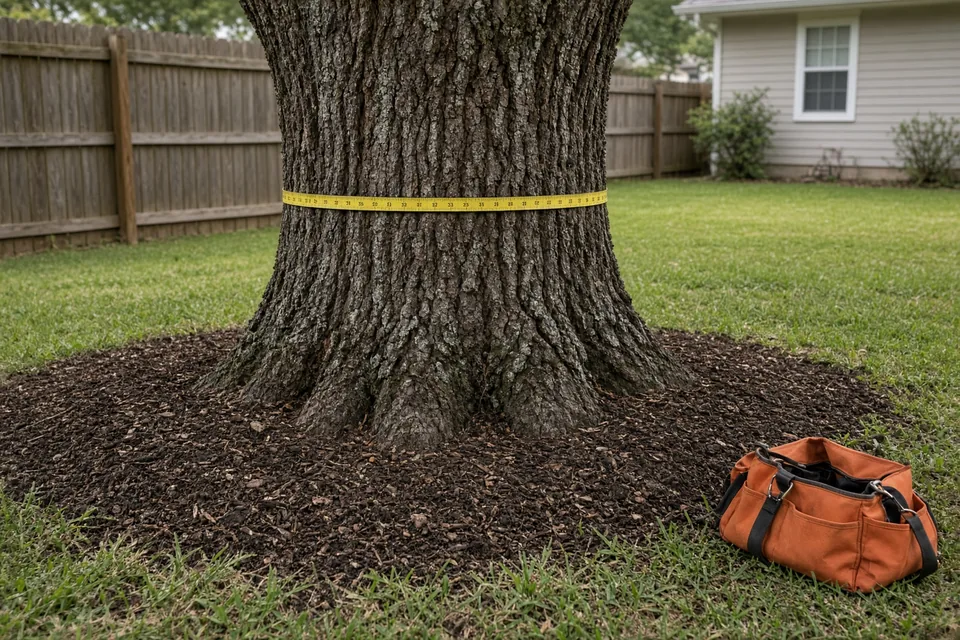 Step 01
Measure the trunk
Measure trunk circumference at 4.5 feet above the ground and divide by 3.14 to find DBH, and inspect overhead wires and roof overhangs.
Why it matters: Measuring trunk diameter 4.5 feet above the ground (DBH) puts your tree into one of the four standard arborist pricing tiers.
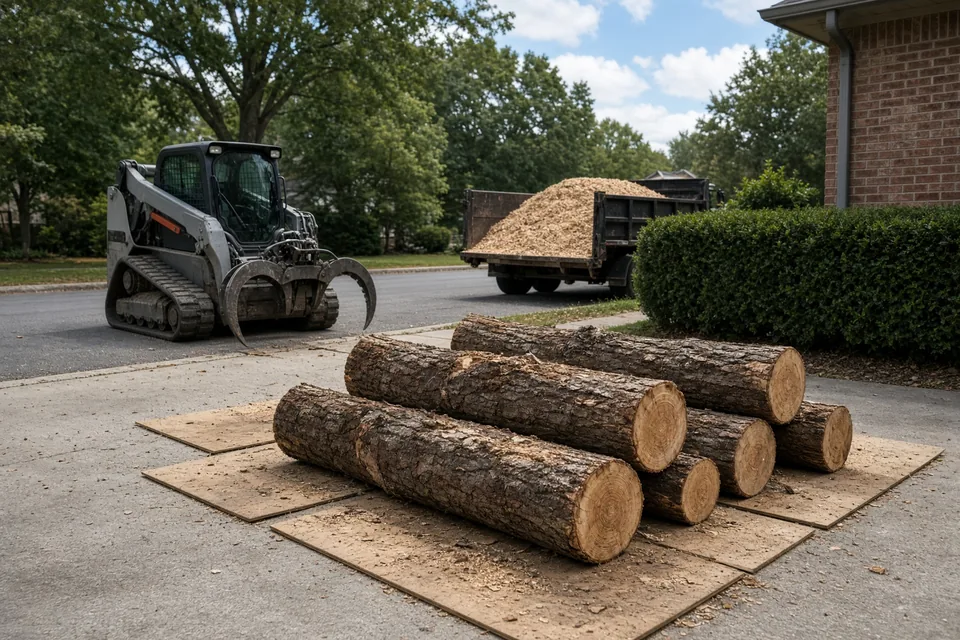 Step 02
Haul the trunk wood
The main stem comes down in sections, and the heavy logs are moved with a grapple loader over plywood mats so the driveway and lawn are not rutted.
Why it matters: Heavy main-stem logs cannot go through a brush chipper; hauling several tons of trunk wood is a separate $100 to $1,200 line item.
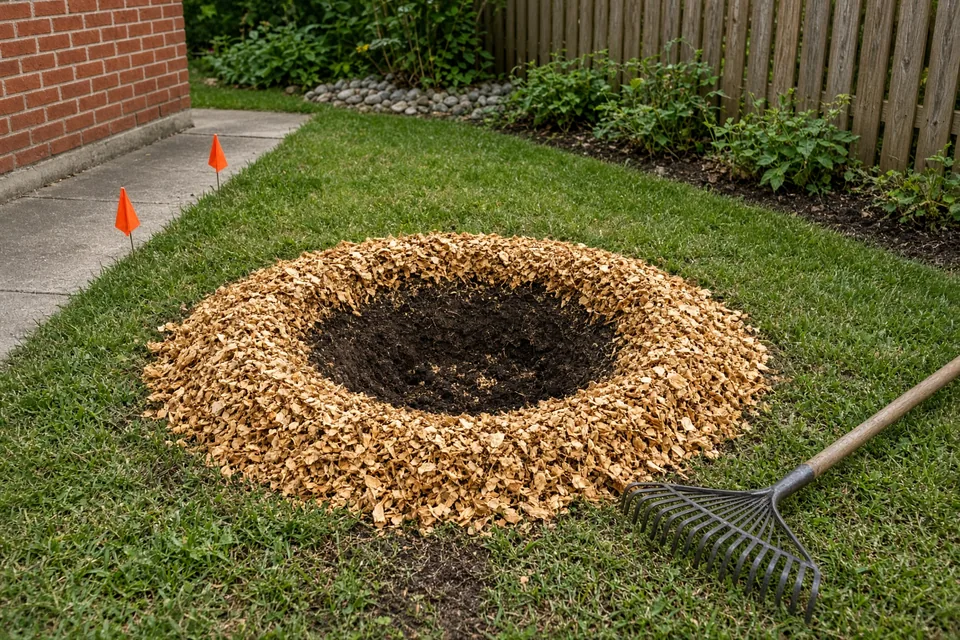 Step 03
Grind the stump
Once 811 utility marks are clear, a stump grinder mills the root flare 6 to 10 inches below grade and the chips are raked back or hauled away.
Why it matters: Stump grinding is billed separately ($150–$650) and requires an 811 underground utility locate before the cutter wheel touches the soil.


On this page
- The diagram, part by part
- Photo guide: hero and 3 project steps
- 2026 tree removal cost table by trunk diameter & scope
- Three worked scenarios with full arithmetic
- Decision table: climber rope rigging vs bucket truck vs hydraulic crane
- Signs a standing tree needs professional removal
- Quote checklist: 8 items to verify on an arborist bid
- Typical tree removal timeline
- Worked example
- Does homeowners insurance pay to remove a tree?
- Sources and further reading
- Frequently asked questions
2026 tree removal cost table by trunk diameter & scope
| Tree Size / Line Item | 2026 Low | 2026 High | What Changes the Price |
|---|---|---|---|
| Under 12 in trunk diameter (DBH at 4.5 ft) — base cut & chip | $250 / tree | $600 / tree | Multi-stem ornamental vs tall sapling; open drop zone |
| 12 to 24 in trunk diameter (DBH) — base cut & chip | $600 / tree | $1,400 / tree | Hardwood (oak/maple) vs softwood (pine); canopy spread |
| 24 to 36 in trunk diameter (DBH) — base cut & chip | $1,400 / tree | $2,800 / tree | Heavy limb rigging, climbing time, multi-load brush chipping |
| Over 36 in trunk diameter (DBH) — base cut & chip | $2,800 / tree | $5,500 / tree | Massive trunk mass, large saw bars, full-day crew commitment |
| Over-roof or near-wire technical rope rigging surcharge | +35% | +35% | Friction lowering every limb away from shingles or service wires |
| Hydraulic crane mobilization & operator (forced if unknown over roof) | $800 | $2,200 | Half-day vs full-day crane rate; reach over house |
| Heavy trunk log grapple haul-away (by diameter tier) | $100 / tree | $1,200 / tree | $100–$220 (<12 in) up to $600–$1,200 (>36 in); $0 if left for firewood |
| Stump grinding 6–10 in below grade (by diameter tier) | $150 / stump | $650 / stump | Root flare width, gate access for grinder, 811 locate |
Three worked scenarios with full arithmetic
Scenario 1: one medium pine (12–24 in DBH) in an open front yard with stump & log haul (1.00x)
A homeowner removes a 20-inch-diameter pine standing in an open front yard where a bucket truck can park in the driveway and limbs drop straight onto the lawn.
- Base Cut, Climb & Brush Chipping (12–24 in DBH): $600 – $1,400
- Over-Roof Rigging Surcharge: $0 (open yard drop zone)
- Crane Rental: $0 (not needed)
- Trunk Log Haul-Away (12–24 in tier): $200 – $450
- Stump Grinding (12–24 in tier): $200 – $350
- National Total: $1,000 to $2,200
Scenario 2: one large mature oak (24–36 in DBH) overhanging a roof, unknown crane access (worked example, 1.00x)
A 30-inch-diameter red oak leans over a backyard bedroom roof. Because the homeowner selects 'Over a roof' and 'Unknown' crane status, the calculator forces the crane line, plus rope rigging, log haul-off, and stump grinding.
- Base Cut, Climb & Brush Chipping (24–36 in DBH): $1,400 – $2,800
- Over-Roof Technical Rope Rigging (+35%): $490 – $980
- Hydraulic Crane (forced when unknown over roof): $800 – $2,200
- Heavy Trunk Log Grapple Haul-Away (24–36 in tier): $350 – $750
- Stump Grinding (24–36 in tier): $300 – $500
- National Total: $3,340 to $7,230
Scenario 3: massive dead ash (>36 in DBH) near service wires, crane required, keep firewood logs (1.00x)
An emerald-ash-borer-killed ash tree with a 40-inch trunk is brittle (unsafe to climb without a crane) and overhangs the house electrical service drop. The homeowner coordinates a temporary service drop with the electric utility and keeps the trunk wood on site.
- Base Cut & Brush Chipping (>36 in DBH): $2,800 – $5,500
- Near-Wire Technical Rigging Surcharge (+35%): $980 – $1,925
- Hydraulic Crane Mobilization: $800 – $2,200
- Trunk Log Haul-Away: $0 (logs left bucked on site)
- Stump Grinding (>36 in tier): $400 – $650
- Utility Service Drop Coordination: $0 invented here (utility sets policy/schedule)
- National Total: $4,980 to $10,275
Decision table: climber rope rigging vs bucket truck vs hydraulic crane
| Removal Method | Equipment Add-On | Yard Impact | When Arborists Use It |
|---|---|---|---|
| Climber + Rope Lowering | +35% labor if over roof/obstructions | Zero heavy wheel ruts in backyard | Healthy wood strong enough to support rigging blocks in fenced backyards |
| Bucket (Aerial Lift) Truck | Included in standard access rate | Needs 10-ft wide driveway or dry turf path | Trees within 50–75 ft of driveway or dead trees too brittle to climb |
| Hydraulic Crane Hoist | +$800 – $2,200 crane line | Parks on street/driveway on outrigger pads | Large trees overhanging roofs, zero drop zone, or structurally compromised trunks |
Signs a standing tree needs professional removal
- Fungal conks or mushrooms growing at the root flare or base: Indicates internal butt rot and loss of root holding strength even if the upper leaves look green.
- Vertical seam cracks, hollow cavities, or co-dominant V-crotches with included bark: High risk of splitting onto the house during wind or ice storms.
- More than 50% crown dieback or bark sloughing off (such as emerald ash borer or pine beetle damage): Dead wood becomes brittle within months, requiring a crane rather than rope climbing if you wait too long.
Quote checklist: 8 items to verify on an arborist bid
- Arborist Liability & Workers' Comp Certificates: Verify that the policy specifically covers tree care/arboriculture at height, not just lawn mowing.
- DBH Trunk Size Confirmed: Does the written scope identify the specific tree(s) and trunk diameter?
- Trunk Log Haul-Off Included: Does the price include hauling away the heavy main-stem trunk logs or only chipping the branches?
- Crane & Driveway Protection Mats: If a crane or skid-steer rolls onto your driveway, are plywood or composite AlturnaMats included to prevent concrete cracking?
- Stump Depth & Root Flare: Does stump grinding specify 6 to 10 inches below grade across the visible surface flare?
- 811 Underground Locate: Who calls 811 before the stump grinder runs?
- Utility Service-Drop Plan: If limbs are within 10 feet of the house electrical drop, who schedules the electric utility disconnect?
- Municipal Tree Removal Permit: Does your city or HOA require a heritage-tree permit or replacement planting before cutting?
Typical tree removal timeline
- Days 1–5 (Before Work): Arborist inspection, municipal tree permit check (if required), electric utility service-drop scheduling, and 811 underground utility locate for stump grinding.
- Removal Day (3 to 8 hours per large tree): Set driveway protection mats, rig and lower canopy sections, chip brush, fell main trunk, and haul heavy logs with grapple truck.
- Stump Day (Same day or 1–3 days later): Grind stump 6–10 inches below grade and backfill hole with chips.
Worked example
A homeowner removes 1 mature oak tree with a 24-to-36-inch trunk diameter at chest height (DBH) whose heavy canopy overhangs the backyard roof. Because the homeowner does not know whether a bucket truck can reach the backyard (crane = unknown over a roof), the crane line is automatically included, along with heavy trunk log haul-off and stump grinding at the 1.00x national baseline.
The default job, line by line
Worked example| Line item | National planning range |
|---|---|
| Base tree cutting, climbing & brush chipping | $1,400 – $2,800 |
| Over-Roof technical rope rigging surcharge | $490 – $980 |
| Hydraulic crane mobilization & operator | $800 – $2,200 |
| Heavy trunk log grapple haul-away | $350 – $750 |
| Stump grinding 6–10 inches below grade | $300 – $500 |
| Total before regional adjustment | $3,340 – $7,230 |
Midpoint about $5,285. These are the calculator's default inputs, so pressing the button above at the national region reproduces this table.
Does homeowners insurance pay to remove a tree?
Removing a standing tree—even if it is dead, hollow, or leaning dangerously toward your bedroom—is homeowner maintenance and is not covered by a standard homeowners insurance policy. Insurance responds to trees only after wind, lightning, or ice knocks a tree down onto a covered structure (such as your roof, detached garage, or fence) or blocks your driveway. When a tree has already fallen onto your house, go to the tree and tarp calculator to price emergency crane lifting off the roof and tarping, and see the roof repair calculator or the fence calculator for structural repairs. Even on a covered tree impact, many policies cap tree-debris haul-away from the yard at $500 per tree and $1,000 per storm occurrence, subject to your deductible (check the should-I-file-a-claim calculator). Policy wording and the adjuster decide every claim.
What this page will not claim
- This page never claims homeowners insurance pays to remove a healthy or standing dead tree: Preventative removal is 100% homeowner maintenance.
- This page never invents an electric utility line-drop fee: Utility policies vary by provider; ask your utility directly.
- This page does not price emergency crane removal of a tree already lying on a crushed roof: Use the tree and tarp calculator for post-impact extraction and tarping.
Sources and further reading
- Bob Vila — How much does it cost to remove a tree?
- This Old House — Tree removal cost
- Maryland Insurance Administration — If a tree falls on your property (PDF)
- International Society of Arboriculture — TreesAreGood.org (finding a certified arborist)
Prices on this page are planning ranges built from public 2026 US cost guides and contractor rate sheets, widened where they disagreed, and multiplied by the same regional index as every other ReplaceCost calculator. Codes and rules come from the bodies listed. See the methodology for how ranges are set and reviewed.
Frequently asked questions
How do I measure my tree's diameter the way a tree service prices it?
Arborists use Diameter at Breast Height (DBH), which is the thickness of the trunk measured 4.5 feet up from the ground on the uphill side of the tree. Wrap a standard flexible tape measure around the trunk at 4.5 feet to find the circumference in inches, then divide that number by 3.14 (pi). For example, a trunk that measures 94 inches around has a 30-inch diameter, putting it in the 24-to-36-inch pricing tier.
Does homeowners insurance pay to remove a dead or leaning tree before it falls on my house?
No. Standard homeowners insurance policies cover sudden, accidental direct physical loss to covered structures—they do not pay for preventative maintenance to cut down a standing healthy, diseased, or dead tree before it falls. Worse, if you know a dead tree on your property is rotten and ignore it until it falls during a mild breeze, an insurer may dispute liability if a neighbor claims negligence.
Why are stump grinding and heavy trunk log hauling priced as separate lines from cutting the tree down?
They require completely different heavy machines. The cutting crew arrives with a bucket truck or climbing gear and a brush chipper that can only shred branches up to 12 to 18 inches thick. Hauling away a 30-inch-thick main trunk requires a separate grapple-loader log truck, and grinding the stump below ground requires a tracked stump grinder after buried utilities are marked by 811.
Why does waiting too long to remove a dead ash or pine tree make the job cost $1,000+ more?
While a recently dead tree still has strong wood fibers, a tree that has been dead for a year or two (especially emerald-ash-borer-killed ash trees or beetle-killed pines) becomes brittle and unpredictable. Once an arborist determines that the trunk or upper crotches are too rotten to safely hold a climber's weight or rigging ropes, the crew must bring in a hydraulic crane ($800 to $2,200) to remove it safely.
What happens when tree branches are touching the electrical wire running to my house?
An arborist cannot safely drop branches across an energized overhead wire. If the wire is the secondary service drop running from the street pole to your house weatherhead, the homeowner or tree company contacts the electric utility in advance to temporarily disconnect and drop the line onto the ground for a few hours while the tree is removed, then reconnect it.
If I tell the tree crew to leave the wood for firewood, what will be left in my yard?
When you waive the trunk log haul-away line ($100 to $1,200), the crew still chips and hauls away all the leafy brush and small branches, but cuts the thick main trunk into 16-to-24-inch-long unsplit log rounds and leaves them where they fall. Be aware that a single 30-inch oak trunk produces 4,000 to 8,000 pounds of wet rounds that each weigh 100 to 300+ pounds before splitting.