Home › Ejector pump
Plumbing · basement bathroom pumpSewage ejector pump cost calculator
Any basement toilet, shower, or laundry sink sitting lower than your home's main sewer exit pipe relies on a sealed sewage pump to lift waste uphill into the gravity sewer line. Stop here if your basement pit only collects clear perimeter footing groundwater and discharges outside onto the lawn—clear-water basement drainage pumps belong on the sump pump calculator.
Across the United States in 2026, swapping a burned-out 1/2 HP or 3/4 HP cast-iron solids-handling sewage ejector pump inside an existing sealed basin runs $850 to $2,150 installed (or $1,450 to $3,400 for a high-head residential grinder pump). Breaking the concrete basement slab to excavate and install a brand-new sealed sewage basin, vent pipe, and 4-inch inlet for a new basement bathroom runs $3,200 to $7,400 complete.
Because a mechanical pump burnout is usually excluded by homeowners insurance unless you carry an equipment-breakdown endorsement—and any resulting sewage overflow draws from the sublimit tested in the water backup calculator—replacing a sticking float switch or noisy pump early saves thousands.
Reviewed 25 October 2026 · Written by Mantu Kumar
See the photos · See the cost diagram · Open the calculator · Every part explained
Key facts at a glance
- A cast-iron solids-handling sewage ejector pump (2-inch spherical solids passage, 1/2 HP to 1 HP) runs $650 to $1,550 installed in an existing basin, whereas a macerating grinder pump runs $1,250 to $2,650 installed.
- Replacing the 2-inch full-port check valve, isolation ball valve, and gas-tight neoprene lid gasket during a pump swap adds $150 to $380.
- Under the International Plumbing Code, a sewage ejector sump pit must have a gas-tight bolted cover and a dedicated atmospheric vent pipe extending to the open air (an air admittance valve is not accepted in its place in most jurisdictions).
- Saw-cutting a concrete basement floor, excavating a pit, setting a new sealed polyethylene or fiberglass sewage basin, connecting the 4-inch inlet, and running the 2-inch roof/stack vent adds $1,950 to $4,200.
- Adding an independent high-water float switch and audible/smart alarm panel runs $150 to $380 installed.
National 2026 planning ranges before your regional multiplier. Sources and method are at the bottom of the page.
2026 planning ranges
- 1Pump
- 2Sealed gasketed basin
- 3Vent
- 4Check valve and ball valve
- 5Float and alarm
- 6Slab break and inlet (new basin only)
- 7Plumbing permit and inspection
- 8Pump horsepower and lift
- 9Ejector or grinder pump
Price your sewage ejector pump
No email · nothing sentDiagram, part by part
Sewage ejector pump: every numbered part explained
The drawing above has 9 numbered parts, from Pump to Ejector or grinder pump. Each card zooms in on one part, says what pushes its price up or down, and what to check on a written quote. After you run the calculator, the parts in your scope show their dollar figure.
1 Pump
$650 – $1,550 (solids-handling ejector) | $1,250 – $2,650 (grinder pump)
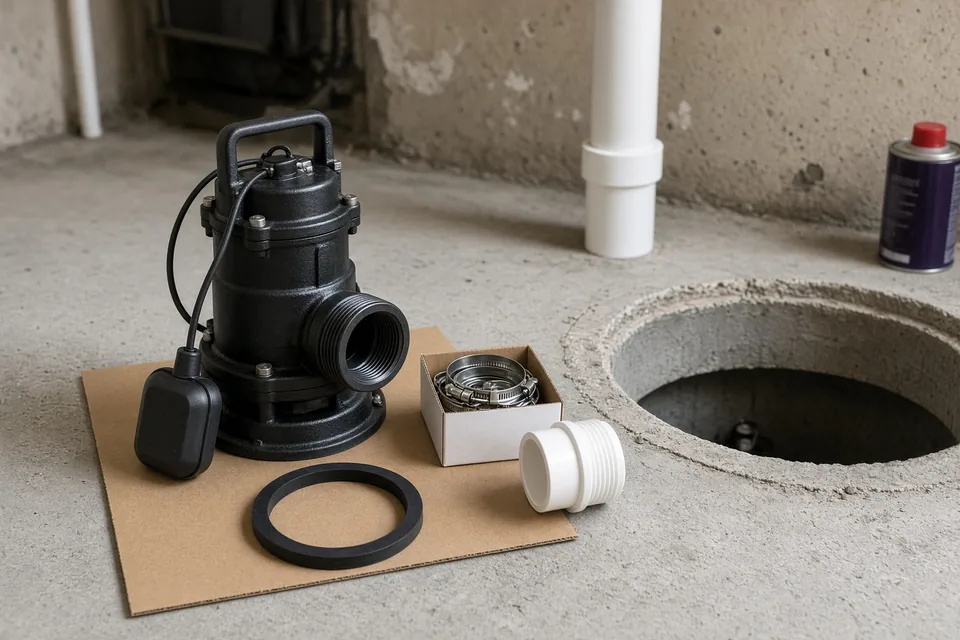
Two types of heavy cast-iron pumps sit inside residential sewage pits. A solids-handling sewage ejector pump ($650–$1,550 installed) uses a recessed vortex impeller to pass 2-inch spherical waste solids unfiltered up 10 to 20 feet into your house's overhead gravity sewer line. A macerating grinder pump ($1,250–$2,650 installed) uses hardened steel cutting blades like a garbage disposal to shred waste and flushable debris into a fine slurry—required when pumping into a pressurized street sewer main or up a steep hillside.
What moves it: Standard 1/2 HP solids-handling ejector for a basement bath versus a 1 HP+ macerating grinder pump for a pressure force main.
On the quote: Never install a 3/8-inch or 1/2-inch clear-water sump pump in a toilet pit—it will clog on the first flush; require a 2-inch solids-handling ejector or grinder pump.
2 Sealed gasketed basin
$60 – $160 (new gasket & cord seals on swap) | $350 – $750 (new basin)
Unlike a groundwater sump pit that can use a slotted lid, a sewage ejector basin holds raw human waste and sewer gas. Plumbing codes require a sealed, gas-tight sewage basin, typically heavy polyethylene or fiberglass, closed with a steel or heavy plastic cover bolted down over a continuous neoprene rubber gasket, with rubber split-stopper grommets sealing the pump and float cords ($60–$160 on a swap; $350–$750 for a new basin).
What moves it: Replacing degraded rubber lid gaskets and cord grommets during a pump swap versus buying a new 18×30-inch basin.
On the quote: Ask the plumber to install a new neoprene lid gasket and cord grommets every time the lid is unbolted so sewer odor never leaks into the basement.
3 Vent
$0 (reuse existing on swap) | $350 – $850 (new 2-inch atmospheric vent run)
Every time 30 gallons of toilet waste rushes into a sealed sewage basin, 30 gallons of foul air must escape—and when the pump discharges in 10 seconds, air must rush back in so a vacuum does not lock the pump. Plumbing codes require the sealed basin to be vented to the outdoors, usually by a vent pipe from the basin lid tied into the house vent system; the local code sets the pipe size. Spring-loaded air admittance valves (cheater vents) are prohibited on pneumatic ejector pits in many jurisdictions.
What moves it: Reconnecting to the existing 2-inch lid vent during a swap versus running new PVC vent pipe up to the attic or main vent stack on a new basin.
On the quote: On a new basement bathroom build, verify that the plumber routes a true 2-inch atmospheric vent pipe to the main vent stack rather than sticking a mechanical cheater vent on the lid.
4 Check valve and ball valve
$150 – $380
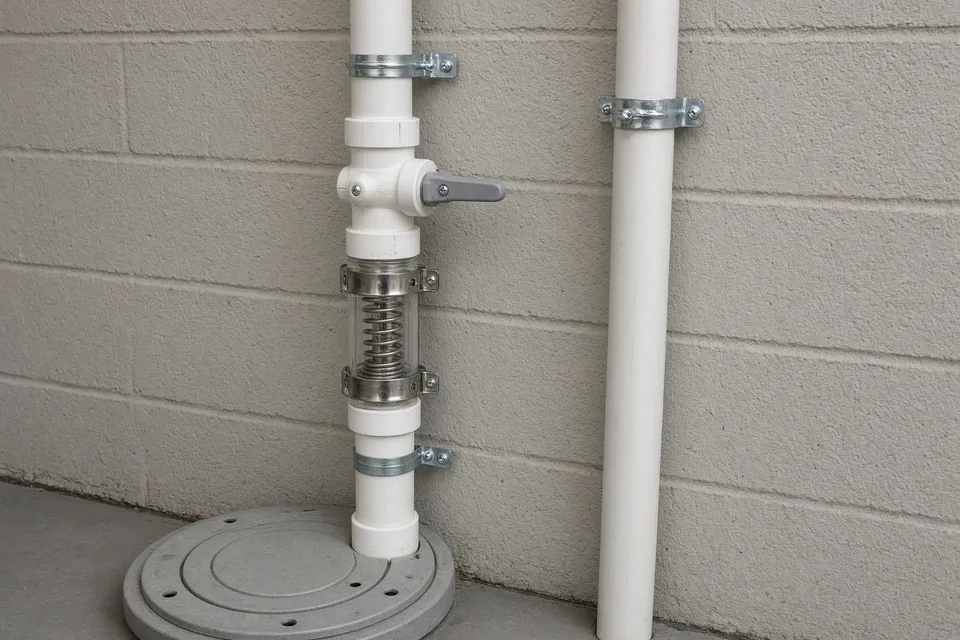
The 2-inch PVC discharge pipe rising from the pit lid up to your overhead sewer main holds several gallons of sewage inside the vertical pipe when the pump shuts off. Under IPC Section 712.2, a full-port 2-inch swing check valve and a quarter-turn PVC ball shutoff valve must be installed on the vertical riser above the lid ($150–$380). If the check valve flapper wears out, that vertical column of sewage slams back into the pit, causing the pump to short-cycle until it burns out.
What moves it: Replacing an old clanking flapper valve with a clear-body quiet-close sewage check valve and a full-port union ball valve.
On the quote: Always replace the 2-inch check valve at the same time you swap a 10-year-old sewage pump—a worn check valve lets sewage fall back into the pit and makes a new pump cycle far more often than it should.
5 Float and alarm
$150 – $380
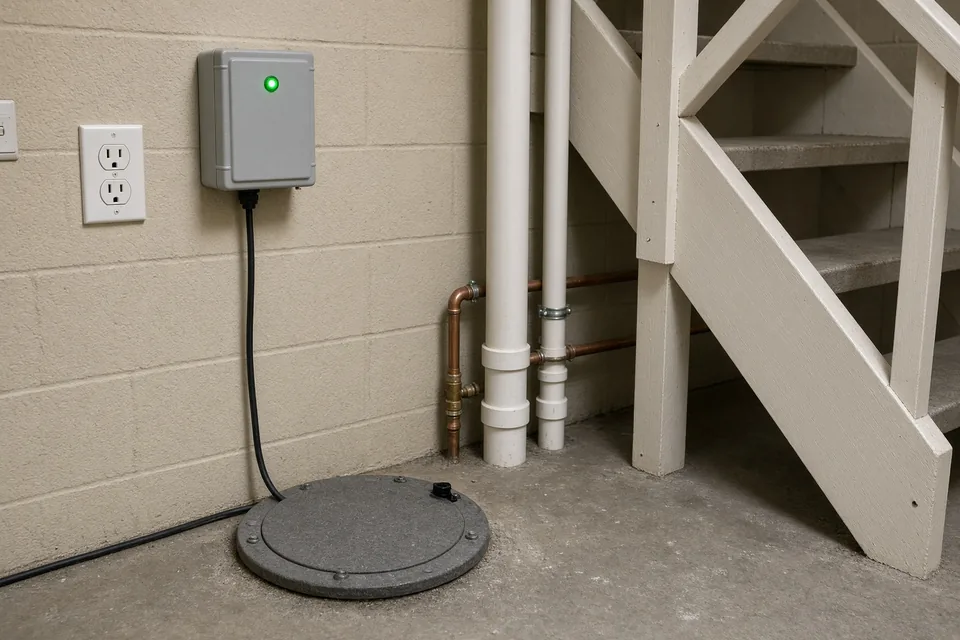
Because a sewage ejector basin is bolted air-tight and often tucked inside a closet under the basement stairs, you cannot see the water level rising if the pump trips a breaker or a piggyback float switch snags on the basin wall. Installing a separate high-water alarm float mounted 4 inches above the pump's turn-on float wired to a 90-decibel wall buzzer and Wi-Fi smartphone alert ($150–$380) warns you to stop flushing before sewage overflows the basement shower pan.
What moves it: Basic battery-backed audible wall buzzer versus a Wi-Fi-connected smart high-water alarm that texts your phone.
On the quote: Have the plumber clamp the high-water alarm sensor on the discharge pipe above the primary operating float and test the buzzer before leaving.
6 Slab break and inlet (new basin only)
$1,600 – $3,600 (new basin installation only)
If you already have an existing basement bathroom pit, you skip this line completely ($0). When adding a new bathroom in a basement where the main sewer pipe hangs on the wall above the floor, plumbers must saw-cut and jackhammer a 3-by-3-foot opening plus trenches in the concrete slab, dig a 30-inch-deep pit, tie the new 4-inch toilet and shower drain line into the side hub of the basin, bed it in pea gravel, and pour concrete back flush ($1,600–$3,600).
What moves it: Concrete slab thickness, high water table or clay soil under the slab, and trench length to the new toilet and shower.
On the quote: If you are only replacing a broken pump inside an existing pit, never accept a quote that includes slab breaking unless the old basin shell is cracked or collapsed.
7 Plumbing permit and inspection
$120 – $350
A new basin always needs a plumbing permit, and many towns require one for a pump replacement too. The inspector checks the sealed lid, the vent, the check valve and the discharge connection. Unpermitted work can surface later during a home sale or an insurance claim.
What moves it: Your town's rules for like-for-like pump swaps and whether a new basin is being installed.
On the quote: Ask whether the permit is included and who schedules the inspection.
8 Pump horsepower and lift
Heavy-duty 3/4 to 1+ HP adds about 25%
A standard 1/2 HP ejector lifts sewage 10 to 15 feet to a basement-ceiling main. A longer horizontal run or a higher lift needs a 3/4 HP or larger pump, which costs more but avoids short runtimes and burned-out motors. The plumber should size the pump from the vertical lift and the length of the discharge line.
What moves it: The height to the sewer line and the length of the discharge pipe.
On the quote: Ask the plumber to write the lift height and the pump model on the quote.
9 Ejector or grinder pump
$650 – $1,550 ejector · $1,250 – $2,650 grinder
A solids-handling ejector pushes waste up to a gravity sewer through 2-inch pipe. A grinder pump shreds waste into a slurry and is used for pressure sewer mains or very long, high runs. Most basement bathrooms that drain to a gravity main need an ejector, not a grinder.
What moves it: Whether your sewer is gravity or pressure, and how far and high the waste must travel.
On the quote: Ask why the pump type was chosen, and confirm the basin and fittings match it.
Project photo guide
Sewage ejector pump in photos: valves, pump and alarm
A sewage ejector system differs from a groundwater sump pit in every code detail: 2-inch piping, a bolted gas-tight gasketed lid, and dual pipes rising from the cover. These four scenes show a completed dual-pipe basement sewage ejector setup, the 2-inch check and ball valve union on the discharge riser, a cast-iron solids-handling pump before installation, and a high-water alarm.

How the job works in 3 key stages
All three step images are AI-generated illustrations for explanation. Not a site inspection, bid, or coverage decision.
 Step 01
Isolate the discharge
Close the 2-inch PVC quarter-turn ball isolation valve on the vertical discharge pipe so sewage in the overhead stack cannot drain back when unbolting the lid.
Why it matters: Closing the upper ball valve isolates the overhead house sewer main so the plumber can unbolt the check valve and pull the pump cleanly.
 Step 02
Swap the pump and seals
Pump down the sealed wet well, replace the cast-iron 2-inch solids-handling ejector or grinder pump, and install a new neoprene rubber lid gasket and cord seals.
Why it matters: A cast-iron sewage ejector pump ($650–$1,550 installed) passes 2-inch solids, while a macerating grinder pump ($1,250–$2,650) shreds waste for pressure sewer mains.
 Step 03
Check valve and alarm
Swap in a new 2-inch quiet-close check valve, clamp the high-water alarm float 4 inches above the operating pump float, and test a full toilet flush cycle.
Why it matters: An independent high-water alarm ($150–$380) sounds a buzzer or phone alert if the pump float fails, giving you time to stop running water before the pit overflows.


On this page
- The diagram, part by part
- Photo guide: hero and 3 project steps
- 2026 sewage ejector & grinder pump cost table
- Three worked scenarios with full arithmetic
- Decision table: solids-handling ejector pump vs macerating grinder pump
- Signs your sewage ejector pump or check valve is failing
- Quote checklist: 7 items to verify on a plumber's estimate
- Typical replacement & new-basin timeline
- Worked example
- Does insurance cover a failed ejector pump?
- Sources and further reading
- Frequently asked questions
2026 sewage ejector & grinder pump cost table
| Sewage Pump Scope / Line Item | 2026 Low | 2026 High | What Changes the Price |
|---|---|---|---|
| Solids-handling sewage ejector pump (1/2 HP, 2-in passage) & swap labor | $650 | $1,550 | Cast-iron body, sanitary pump-down of wet well & disposal |
| Macerating sewage grinder pump (1/2 HP to 1 HP) & swap labor | $1,250 | $2,650 | Hardened cutter wheel for high head or municipal pressure sewer |
| Upgrade to heavy-duty 3/4 HP or 1+ HP high-head tier | +25% | +25% | Required for >16 ft vertical lift or long horizontal runs |
| New neoprene lid gasket & cord seals (swap) OR new sealed basin | $60 | $750 | $60–$160 gasket/grommet reseal vs $350–$750 new 18×30 basin |
| New 2-inch full-port quiet check valve & PVC ball shutoff valve | $150 | $380 | IPC 712.2 requirement; stops vertical pipe backflow & water hammer |
| Independent high-water float switch & audible/Wi-Fi alarm | $150 | $380 | Battery-backed buzzer vs Wi-Fi smartphone leak/level alert |
| Dedicated 2-inch atmospheric vent pipe run (new basin only) | $350 | $850 | Tied into the house vent system per local code |
| Concrete slab break, pit excavation, 4-in inlet & concrete patch | $1,600 | $3,600 | New basement bathroom pit only ($0 when swapping in existing pit) |
| Municipal plumbing permit & inspection | $120 | $320 | Required on new basins and in many cities for ejector replacements |
Three worked scenarios with full arithmetic
Scenario 1: standard 1/2 HP sewage ejector swap in existing pit with new valves & alarm (worked example, 1.00x)
A basement bathroom toilet stops draining because a 10-year-old 1/2 HP sewage ejector pump burned out. The plumber pumps down the sealed pit, swaps in a new cast-iron 1/2 HP solids-handling ejector, replaces the 2-inch check and ball valves, installs a new rubber lid gasket, adds a high-water alarm, and pulls a permit.
- 1/2 HP Cast-Iron Ejector Pump & Sanitary Swap Labor: $650 – $1,550
- New Bolted Lid Gasket & Cord Grommets: $60 – $160
- New 2-Inch Quiet Check Valve & Ball Shutoff Valve: $150 – $380
- Independent High-Water Float & Alarm: $150 – $380
- Municipal Plumbing Permit: $120 – $320
- National Total: $1,130 to $2,790
Scenario 2: heavy-duty 1 HP grinder pump replacement on a low-pressure sewer line (1.00x)
A hillside home connected to a municipal low-pressure street sewer main needs a replacement 1 HP macerating grinder pump (pump_type = grinder, hp_tier = hp_34_1 +25%) inside the existing basin, plus a new check/ball valve assembly and high-water alarm.
- 1 HP Macerating Grinder Pump & Swap Labor ($1,250–$2,650 × 1.25): $1,563 – $3,313
- New Neoprene Lid Gasket & Cord Seals: $60 – $160
- New High-Pressure Check Valve & Ball Valve: $150 – $380
- High-Water Alarm Panel: $150 – $380
- Municipal Plumbing Permit: $120 – $320
- National Total: $2,043 to $4,553
Scenario 3: brand-new sealed sewage basin & ejector pump cut into a concrete basement floor (1.00x)
A homeowner finishing a basement bathroom (job = new_basin) needs the concrete floor saw-cut, a 30-inch pit excavated, a new sealed 18×30 polyethylene basin set with a 4-inch inlet, a 2-inch atmospheric vent run to the main stack, and a 1/2 HP cast-iron ejector pump with valves and alarm.
- 1/2 HP Cast-Iron Ejector Pump Installed: $650 – $1,550
- New Sealed Polyethylene Basin & Gasketed Steel Cover: $350 – $750
- New 2-Inch Atmospheric Vent Pipe to Main Stack: $350 – $850
- New 2-Inch Check Valve & Ball Shutoff Valve: $150 – $380
- High-Water Alarm: $150 – $380
- Concrete Slab Break, Excavation, 4-In Inlet & Concrete Patch: $1,600 – $3,600
- Plumbing Permit & Rough/Final Inspection: $120 – $320
- National Total: $3,370 to $7,830
Decision table: solids-handling ejector pump vs macerating grinder pump
| Pump Type | Installed Swap Band | How It Handles Solids | When You Need It |
|---|---|---|---|
| Solids-Handling Ejector | $650 – $1,550 (1/2 HP) | Vortex impeller passes 2-inch solids whole through a 2-in pipe | 90% of residential basement bathrooms pumping 8–15 ft up into an overhead house gravity sewer |
| Macerating Grinder Pump | $1,250 – $2,650+ | Steel cutter wheel shreds solids into fine slurry for 1.25–2 in pipe | Homes pumping into a pressurized street sewer main, up a steep >20 ft hill, or where wipes clog standard ejectors |
Signs your sewage ejector pump or check valve is failing
- Loud bang or thud in the pipe every time the pump shuts off: Indicates a worn check valve letting the vertical column of sewage slam downward.
- Pump runs every 2 minutes even when nobody is using the basement bathroom: Classic sign that the 2-inch check valve is leaking sewage back down into the pit.
- Sewer gas smell around the basement utility closet: Points to a dried-out neoprene lid gasket, loose split-cord grommet, or someone installing an unapproved mechanical vent on the lid.
Quote checklist: 7 items to verify on a plumber's estimate
- Cast-Iron Housing & 2-Inch Passage: Is a heavy cast-iron sewage pump specified rather than a plastic clear-water sump pump?
- Sanitary Pump-Down Included: Does the price include vacuuming/pumping down the foul standing waste inside the pit before unbolting the pump?
- New Check Valve & Ball Valve: Are both a 2-inch full-port check valve and a quarter-turn isolation ball valve included above the lid?
- New Neoprene Lid Gasket & Cord Seals: Will the cover be resealed gas-tight?
- Float Switch Clearance Check: Will the plumber verify that a tethered or vertical float switch cannot hang up against the basin wall?
- True Atmospheric Vent (New Basins): On a new pit, is the basin vented to the outdoors as the local plumbing code requires?
- Dedicated GFCI / Circuit Check: Is the pump plugged into a dedicated circuit separate from the high-water alarm circuit?
Typical replacement & new-basin timeline
- Existing Basin Pump Swap (2 to 4 hours): Shut off power and upper ball valve, unbolt lid, pump out standing liquid, lift out dead unit, drop in new cast-iron pump with new PVC riser and check valve, bolt down new gasket, and test 3 full flush cycles.
- New Basin & Slab Break (2 to 3 days): Day 1 saw-cut concrete floor, excavate pit, set basin and 4-inch inlet; Day 2 run 2-inch discharge and 2-inch vent pipe, pass rough plumbing inspection, pour concrete patch, and wire alarm.
Worked example
A homeowner replaces a failed 10-year-old 1/2 HP cast-iron solids-handling sewage ejector pump inside an existing sealed basement basin (job = pump_valves), including biohazard pump-down of the pit, a new neoprene lid gasket and cord seal, a new 2-inch quiet check valve and PVC ball isolation valve, a new high-water level alarm, and a municipal permit at the 1.00x national baseline.
The default job, line by line
Worked example| Line item | National planning range |
|---|---|
| 1/2 HP cast-iron solids-handling sewage ejector pump & sanitary swap labor | $650 – $1,550 |
| New bolted neoprene lid gasket & split cord grommets | $60 – $160 |
| New 2-inch quiet check valve & full-port ball valve | $150 – $380 |
| Independent high-water float & audible/wi-fi alarm | $150 – $380 |
| Municipal plumbing permit | $120 – $320 |
| Total before regional adjustment | $1,130 – $2,790 |
Midpoint about $1,960. These are the calculator's default inputs, so pressing the button above at the national region reproduces this table.
Does insurance cover a failed ejector pump?
Many policies treat a sewage ejector pump failure the exact same way they treat a sump pump failure: the mechanical burnout of the pump itself is excluded as wear and tear unless you added an optional Equipment Breakdown endorsement to your homeowners policy. What if the dead ejector pump goes unnoticed and raw sewage backs up through your basement shower pan and ruins your finished basement flooring and drywall? Standard unendorsed homeowners policies exclude water or sewage that backs up through sewers or drains. To have the cleanup, sanitization (the water damage calculator), and basement put-back (the basement finish calculator) covered, you must carry an active Water Back-Up and Sump Discharge endorsement—and you can test how your sublimit handles both cleanup and the excluded pump right now in the water backup calculator. Policy wording and the adjuster decide every claim.
What this page will not claim
- This page does not cover clear-water groundwater sump pumps: Use the sump pump calculator for perforated basement drainage pits that discharge rainwater outside.
- This page does not claim standard homeowners insurance pays for a burned-out pump: Mechanical breakdown is excluded unless you carry an equipment-breakdown rider.
- This page does not price full basement bathroom remodels: Use the basement finish calculator and the bathroom remodel calculator for framing, tile, and fixtures.
Sources and further reading
- Angi — How much does a sewer ejector pump cost?
- International Code Council — International Residential Code
- MoneyGeek — What is water backup coverage?
Prices on this page are planning ranges built from public 2026 US cost guides and contractor rate sheets, widened where they disagreed, and multiplied by the same regional index as every other ReplaceCost calculator. Codes and rules come from the bodies listed. See the methodology for how ranges are set and reviewed.
Frequently asked questions
What is the difference between a basement sump pump and a sewage ejector pump?
A sump pump sits in a perforated pit under your basement floor, collects clear groundwater from perimeter drain tiles, and pumps it through a 1.5-inch pipe out onto your yard or storm drain (priced on the sump pump calculator). A sewage ejector pump sits inside a solid, bolted, gas-tight basin with a 2-inch roof vent, collects raw human waste and toilet paper from a basement bathroom, and pumps it through a 2-inch pipe into your home's sanitary sewer main.
Do I need a sewage ejector pump or a grinder pump for my basement bathroom?
If your pump only has to lift basement bathroom waste 8 to 15 feet straight up into your home's 3-inch or 4-inch gravity sewer line hanging from the basement ceiling, a standard 1/2 HP solids-handling sewage ejector pump ($650 to $1,550 installed) is the standard choice. You only need a more expensive macerating grinder pump ($1,250 to $2,650) if you are pumping into a pressurized street sewer main or up a steep hillside.
Why does a sewage ejector pit have two pipes coming out of the lid while a sump pump has only one?
Because a sewage ejector lid is bolted and gasketed completely air-tight to trap sewer gas and raw waste odors inside the basin, air cannot enter or escape through the lid. One 2-inch pipe is the pumped discharge line (with the check valve and ball valve) going to the sewer main, and the second 2-inch pipe is the atmospheric vent going up to the roof vent stack so the pit can breathe.
Can a plumber put a spring-loaded cheater vent (air admittance valve) on a sewage ejector pit instead of venting to the roof?
In most jurisdictions, no. A standard air admittance valve (AAV) only opens under negative pressure (suction) to let air in—it stays closed under positive pressure. When a toilet flushes into a sealed sewage basin, displaced air must escape outward under positive pressure; if an AAV stays shut, incoming waste airlocks and gurgles back up through the basement shower trap. Plumbing codes generally require a true open vent.
Why should the high-water alarm be plugged into a different circuit than the sewage pump?
If a jammed impeller or moisture inside the motor causes the sewage ejector pump to trip its GFCI outlet or circuit breaker, any alarm plugged into that exact same dead outlet loses power too unless it has a fresh 9-volt battery backup. Plugging the alarm transformer into a separate lighting circuit—and keeping a fresh backup battery installed—ensures the buzzer still sounds when the pump circuit trips.
How long does a cast-iron residential sewage ejector pump typically last?
A quality cast-iron submersible sewage ejector pump in a single-family basement bathroom typically lasts 7 to 12 years (10-year planning average), though the mechanical float switch often fails earlier at 5 to 8 years. Flushing so-called 'flushable' wipes, dental floss, feminine products, or grease is the fastest way to jam a vortex impeller and burn out the motor in under 3 years.